



Gabriela Atena and Leticia Yulita
Project Leads
John Manders
Editor
Andrés Caldironi
Coordinator
The cover illustration is a painting by Jerónimo Granados.
ISBN 978-950-9771-46-8
Descargar libro completo
VERSIÓN PDF
Decolonising Creative Writing in English Language Teaching / Beth Lane … [et al.] ; dirigido por Gabriela Atena ; Leticia Yulita ; editado por John Manders.
Coordinación general de Andrés Caldironi1a ed compendiada. Bahía Blanca: Instituto Superior Juan XXIII ; Norwich : University of East Anglia-UEA, 2023.
Libro digital, DXReader – Archivo Digital: descarga y online – ISBN 978-950-9771-46-8
1. Biografías. 2. Inglés para Niños. 3. Literatura Infantil y Juvenil Inglesa. I. Lane, Beth. II. Caldironi, Andrés, coord. III. Atena, Gabriela, dir. IV. Yulita, Leticia, dir. V. Manders, John, ed. CDD 420.9
ACKNOWLEDGEMENTS
We would like to express our deepest gratitude to Instituto Superior Juan XXIII’s Director Adrián Mandará and its Deputy Director Verónica García, as well as to Cecilia Cicolini, Director of Studies at Network Institute for their enthusiastic support in our project and for kindly hosting Dr. Leticia Yulita and the four students from the University of
East Anglia.
Our sincere gratitude also goes to our project collaborators for their generous support, helpful feedback and contributions with their academic expertise to this project: Griselda Beacon, Claudia Ferradas, Laura Renart, Teresa Manera and Stella Grenat.
We would also like to acknowledge the grants received from the UK’s Turing
Scheme and UEA’s HUM Global Citizen Fund, as well as the support and recognition received from Héctor Gay,
the Mayor of Bahía Blanca, and to the local city hall for having declared our project of ‘municipal interest’.
We are also grateful to our educational tour guides: Ana Luz La Banca and Martina Granados Beacon and to the institutions, businesses and
organisations that supported and collaborated with our work:
In Buenos Aires
Network Institute
Instituto Superior del Profesorado Sáez
Books&Coffee
Colonias de Inmersión al Idioma Inglés
In Bahía Blanca
Instituto Superior ‘Juan XXIII’
Centro Social Vicentino
Sherlock Holmes English Centre
Asociación de Profesores de Inglés de Bahía Blanca
Colegio San Vicente de Paul
Academia Santa Clara de Asís
Instituto Superior en Ciencias de la Comunicación Social
Colegio La Inmaculada
In Punta Alta
Museo Municipal De Ciencias Naturales Carlos Darwin
In Entre Ríos
Carina Leichner, Universidad Autónoma de Entre Ríos
In Monte Hermoso
Cristian Jensen, Franco Gentilli
In Pehuen-có
Emilia Bianco, Teresa Manera
Our heartfelt thanks go to all the students who participated in the development of this resource, enthusiastically contributing to the success of this project. Students’ names below in alphabetical order:
Beth Lane, Cassandra Piejko, Cathy Sole, Finlay Porter, Barros Micaela, Cepeda Rodrigo, GarciaIder Gil Julieta, González Triana, Luayza Sofía, Mamani Erika, Martín Julieta, Prost Gisela, Rodriguez Belén, Sgarbossa Ana, Torrez Guido
PREFACE
Our Local Heroes’ is an educational resource for English language learners (A2 to C2 levels) about the lives of five influential members of the local ‘bahiense’ community: Colonel Ramón Estomba, Teresa Manera, Natty Petrosino, Sergio Hernández and Manu Ginóbili. This is the outcome of a ‘Decolonising Creative Writing’ project developed in partnership with students from Instituto Superior ‘Juan XXIII’, Bahía Blanca, Argentina and the University of East Anglia (UEA), Norwich, UK. In their work, the students highlighted the accomplishments of these inspirational men and women who have shaped the history of Bahía Blanca and made a significant local, national and international impact.
This is an entirely student-generated output, created by Juan XXIII students acting as researchers and writers of the original manuscripts, and UEA students acting as peer reviewers, commenting on, discussing and providing feedback on the original writing. Additionally, UEA students wrote a Murder Mystery, combining Anglo-Argentine cultural elements, at two levels of English language proficiency. The students wrote these stories in a carefully graded and accessible language for learners of English as a foreign language, guided by Gabriela Atena and Leticia Yulita as project leads, John Manders as editor and Andrés Caldironi as coordinator.
This decolonising project had a strong focus on interdisciplinarity, with activities in creative writing, history, literature, drama, citizenship, intercultural education and language learning, crafting connections between geology, palaeontology, the arts and the humanities. We were not prescriptive in our interpretations of ‘decolonisation’ and worked on this project with no normative definitions. We were aware of the challenges of enacting decolonisation in practice and understood that the process of decolonisation can be messy, complex and difficult. With this in mind, we embraced the complexities, the uncertainties, the paradoxes and the contradictions that decolonisation might bring without becoming irritated, anxious or overwhelmed. Our ambition was to only gesture towards the direction of decolonisation and that it was acceptable to make mistakes because they offered important learning opportunities.
This resource is the students’ attempts to ‘Latin Americanise’, ‘indigenize’ and ‘localise’ English language teaching as one way of freeing the mind from colonial ideology and to address inequalities and disparities in knowledge production in English language teaching. We welcome donations from those who benefit from these educational resources for our chosen charitable NGO ‘Centro Social Vicentino’. We are also interested in hearing about how teachers and students use these learning materials and what pedagogical approaches are implemented. We’d love to hear your feedback so please feel free to email us at gaby_atena@yahoo.com.ar and l.yulita@uea.ac.uk to share your ideas and experiences of using this resource.
CONTENTS
- Emilia’s Dream
- Colonel Ramón Estomba – The Faceless Founder
- Teresa Maneraand Geology
- Natty Petrosino: Argentina’s Mother Teresa
- From Bahía Blanca to the NBA: Manu Ginóbili
- Sergio Hernández
- A Murder Mystery Pehuen-Có, 1833 Advanced Level of English (C1+)
- A Murder Mystery Pehuen-Có, 1833 Simplified Version (B1+)
STORY 1
Emilia’s Dream’ was developed and written by John Manders for English language learners (A2+ levels) with edited excerpts from students of Instituto Superior “Juan XXIII”, Bahía Blanca, Argentina and Cassandra Piejko, Cathy Sole, Finlay Porter and Beth Lane from the University of East Anglia, UK.
Emilia’s Dream
Emilia walked through the door of her house and sighed. “My schoolwork is SO boring!” she said.
“What is the matter?” asked her mother. “It is my history lesson,” she replied. “We must write a story on famous Bahienses tomorrow. I don’t know if there are any!”. “Don’t worry,” said her mother, “you will think of something!”
That night, Emilia went to bed a little worried. What could she write about tomorrow?
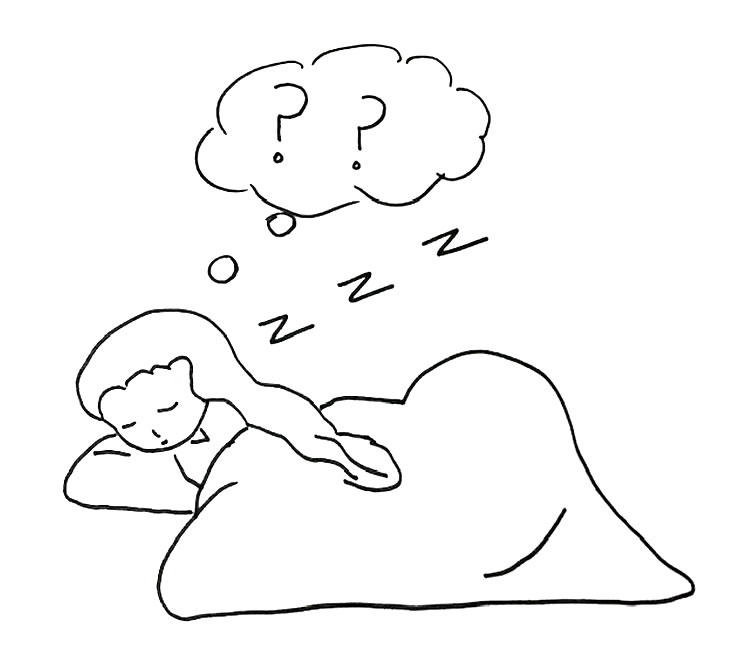
In the middle of the night, Emilia had a strange dream … or was it real? She heard a voice who asked, “how are you?”
“I am sad,” she replied, “because tomorrow I must write about famous Bahienses.” “Oh!” he replied, “there are so many to choose from!”
“Really? Can you tell me about them?” asked Emilia. “Of course!” he answered.
“One person I can tell you about is Manu Ginóbili, who is a very famous basketball player”
“I know everything about Manu! He’s my favourite basketball player”, exclaimed Emilia.
“He learned to play basketball at Club Bahiense del Norte, where his father worked as a coach. I also play basketball in this club. It’s my favourite sport!”
“Did you know that he was worried about being short? He didn’t need to though, as he was so good at basketball that he played for Argentina in World Championships and Olympics winning a Gold Medal in 2004. He even carried the Olympic flag 4 years later.”
“So do you like basketball, Emilia?”
“Yes, I love basketball!”
Emilia listened to the man attentively. He told her that Manu’s mother didn’t let him play basketball in the backyard of her house as he could damage her plants! This was why the family never had a basketball hoop in the house.
“I’m luckier than Manu then!” Emilia said. “I have a basketball hoop in my backyard and my mum lets me play basketball there all the time.”
“Do you study English, Emilia?”, the man asked.
“I do. At school”, she replied.
The man then told Emilia that Manu Ginóbili liked going to school and enjoyed studying, so learning English was easy for him. He went to the United States to join the best league in the world and became one of the best basketball players, winning 4 championships.
“Manu is my hero. I love it when he tricks his opponents by changing directions very quickly and fooling the other players” Emilia said.
Today, Manu travels around the world with his wife and three sons. He lives in the United States but often returns to Bahía Blanca and to Monte Hermoso, too.
“Perhaps, one day you may see him!” the man said.
“I wish!” Emilia felt happy. She could now write about Manu for her school homework, but she still needed to write about three more famous Bahienses and she had no idea of who they could be!
“You could write about Teresa Manera”, the man suggested. “She is a very famous geologist, who lived in Bahía Blanca until she got married. She then moved with her family to Punta Alta. Have you heard about her?”
“No, I haven’t. What exactly does a ‘geologist’ do?”
“A geologist is someone who studies the surface of the Earth, like rocks, fossils and minerals. Do you like nature, Emilia?”
“Yes, I do. My grandfather has a beautiful house in Pehuencó with lots of rocks, plants and flowers in his garden. He even has a beehive in a wooden box. It’s got so many bees in it!”
“Such a coincidence! Teresa now lives in Pehuencó too … who knows? Maybe she’s your grandfather’s neighbour!”
“Like you, when she was your age, she also liked looking at plants and bugs. Her own grandfather had lots of books about animals and rocks. She enjoyed reading them.”
Then the man told Emilia that one day Teresa and her husband went to the beach in Pehuencó and found a fossil shell of a Glyptodont, which they gave to Universidad Nacional del Sur.
Emilia became curious. “A Glyptodont? What is that?”
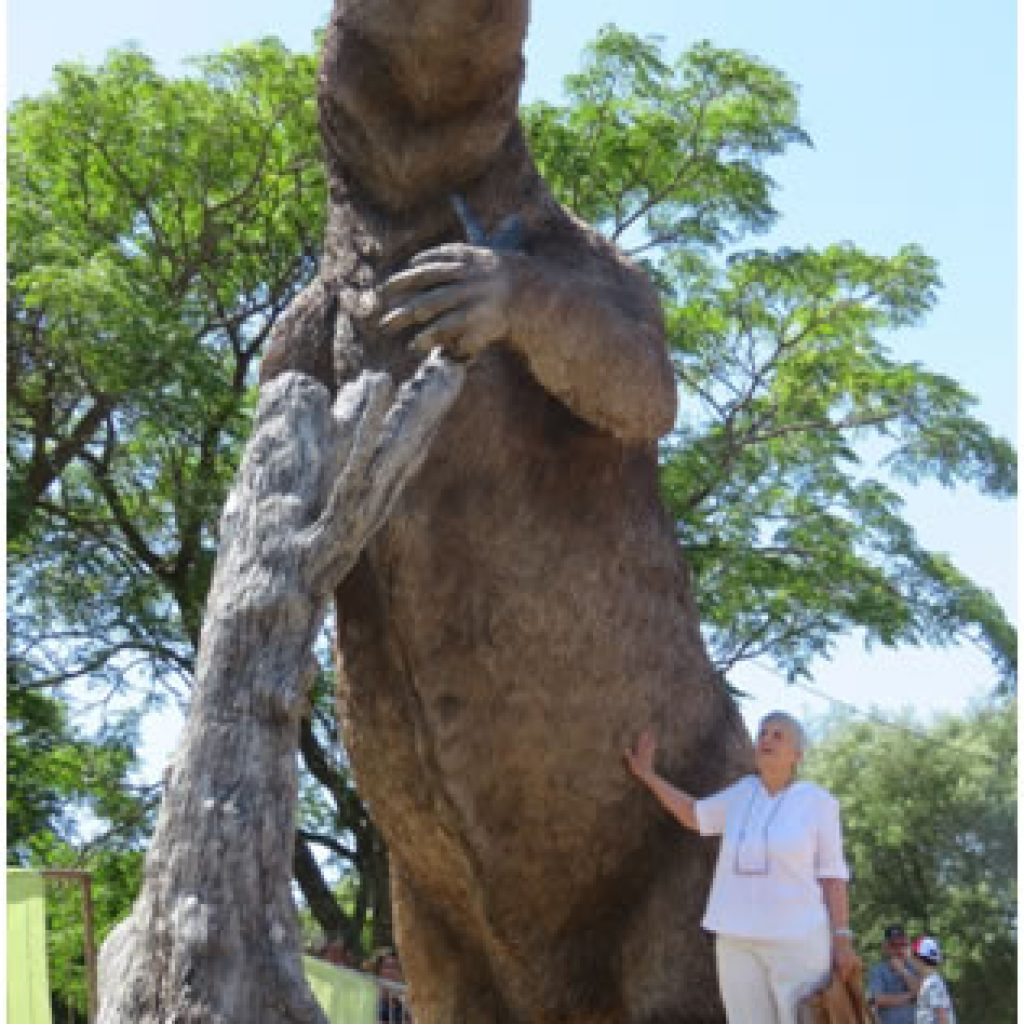
The man explained that a Glyptodont was a prehistoric giant armadillo. Teresa had made such an amazing discovery in Pehuencó!
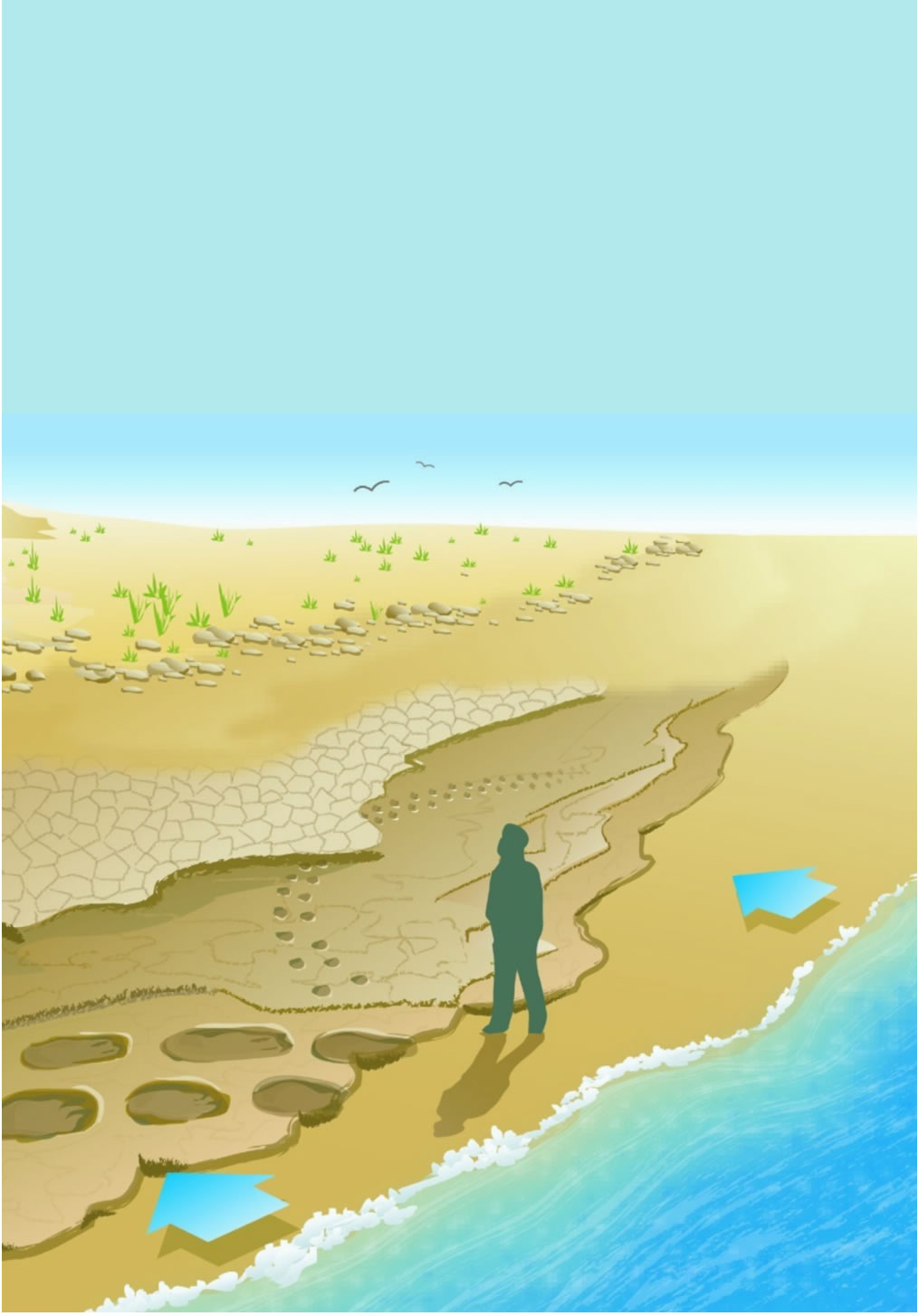
“Unfortunately, people drive cars on the beach in Pehuencó damaging the footprints. Teresa wanted to preserve these footprints so she made copies of the fossils. She won an award for her excellent work, which made her a well-known scientist around the world.”
Emilia wondered what she could do to stop people from driving on the beach. “Maybe I could design a poster with a message, take copies and deliver them in the streets when I visit grandpa?” she thought.
Thanks to Teresa’s work, the local authorities created the “Reserva Natural Provincial” in this area of Pehuencó. This was a great achievement.
“Teresa is a world-renowned geologist and she is from Bahía Blanca so maybe you could write about her in your homework. Did you know that the Rolex Company gave her a lot of money to carry out more projects to preserve the fossils? Maybe one day you’ll find a fossil in Pehuencó too and become important in the world too!”, added the man.
Emilia was getting more and more excited about her school project. “My teacher will be very pleased about my work”, she thought with a big smile on her face.
Still Emilia needed more people of influence who had made an impact in Bahía Blanca to complete her homework.
“Another famous person is Sergio Hernández, who lived in Villa Mitre when he was your age. There was a basketball club only two blocks away from his house”, said the kind man.
“Villa Mitre? That’s where I used to play too! I can’t believe it!” said Emilia.
“Yes! He loved how the game was played. He knew in his heart that he wouldn’t be a great player, but he did hope to be a great coach instead. When he was still young, he was asked by a headmaster to lead a team of boys, and from there he got better and better at coaching until he became very famous,” replied the man.
“I wish something like that would happen for me,” Emilia said.
“Keep working hard at the things you love and you never know!” the man replied.
Sergio eventually won 6 Argentine League championships and led Argentina to World Championship medals.
“Do you know that Sergio would probably have been a teacher if he hadn’t become a coach? He really felt that he wanted to share his knowledge” said the man.
“Oh!” replied Emilia, “I hadn’t really thought of my teachers like that before… that they are trying to help us so much and that they want us to succeed”. She would definitely work harder at school now – she wanted to do well and she wanted her teachers to be proud of her.
Emilia hoped the man would tell her more stories about more people from Bahía Blanca.
“Have you heard about Natty Petrosino”, the man asked. “She was a famous woman, devoted to God”.
Natty Petrosino was born in La Pampa, but she moved to Bahía Blanca when she was only seven. When she was older, she became a successful model and actress. She met her husband Vicente in Bahía Blanca and they had two children, Jorge and Fabián.
Sadly, when she was 27, Natty was told she had ear cancer. During surgery, her heart stopped. When this happened, she had a vision that changed her life. In her vision, Jesus came to her and said, ‘Go back and prove to the world that death doesn’t exist.’
“But I know death exists! My grandma died only last year. Is it possible not to die?”, Emilia asked.
The man then explained that for Natty the spirit never dies. She believed that if she helped those most in need, the spirit would always live.
After several years, Natty had another vision from Jesus asking her to repair an abandoned church. She obeyed Jesus’ command and turned it into an institution for men with physical disabilities and mental health issues. In Bahía Blanca this place was called the cotolengo.
“Natty helped many people in need. For example, she noticed that prisoners were not fed properly or looked after in their health, so she helped them with food and medicines. She also helped homeless people. She fed them, clothed them and prayed with them.”
“How did she get the money?” Emilia was intrigued to know.
“She organised fairs where people brought second-hand clothes, furniture and household items to give to those in need. Each of these fairs had over 3000 attendees!”
“All of these things didn’t cost Natty anything as the money came from donations from people who believed in her cause.”
Natty’s charity work continued in other parts of the country when she decided to leave Bahía Blanca to assist the poor in some of the most remote places in Argentina. She travelled to Chaco, Mendoza, Tucumán and Formosa helping the most disadvantaged native communities.
One time, she had to live in a tent for several months for her to be accepted by the Wichí community. Afterwards, she built houses, a hospital and a school, eventually making a new settlement called Barrio Bahía Blanca.
Natty was an incredible woman. She was nominated for the Nobel Peace Prize in 2006 and in 2012, she was awarded the International Prize Jaime Brunet in Spain. When she was there, she received a call from Pope Francisco. He congratulated and invited her to the Vatican, but she decided not to go. She said, “the poor are waiting for me.”
Emilia thought this was a great story about someone who helped so many people. The name ‘Natty Petrosino’ was familiar to her, but she didn’t know much about her work.
“Can I help Natty with her charity work?”, Emilia asked.
“I’m sure you could. All you need to do is speak with Natty’s friends and ask them how you can help. Natty has died now after a long and happy life, but her presence is still with those who loved her and those she helped and inspired”
“Natty may have been right after all … the spirit never dies”, Emilia thought.
“You know so much about people from Bahía Blanca. How come? Who are you?” Emilia asked the man.

“My name is Ramón. Colonel Ramón Estomba. I am the founder of Bahía Blanca,” he replied.
“I was born a long time ago in 1790 in Montevideo, Uruguay. All of my family were soldiers or sailors and we all fought in Independence Wars as we all wanted to be free.”
Emilia thought her school homework was getting more and more interesting by the minute. She was now talking with the very person who had founded the city of Bahía Blanca!
“Did you fight in any battles?” she asked in excitement.
“Yes, I fought in many battles. When I was only 21, I fought alongside General Belgrano, but I was seriously wounded during a battle called Ayohuma. Two soldiers took care of me and healed me. However, I was soon taken prisoner by the Spanish and spent seven years in the Callao prison. This was a most terrible place and the Spanish were merciless with the prisoners.”
Colonel Estomba continued with his story. He told Emilia that San Martín freed him in 1820 and that he joined his army to continue the fight for independence. He fought for many years in the wars with Brazil until eventually he was made a colonel and had his own army.
“My army was made up of many different peoples, including Criollos, Bonaerenses, Tehuelches, Africans, Araucanos and Europeans,” he said.
The Tehuelches wanted to be a part of Argentina, so they helped him pass through their territory and even helped him build the “Fortaleza Protectora Argentina.”
“In 1828, we searched for the best place to build the fortress. We went to the area that is now Bahía Blanca and on 11th April we agreed that we had reached the right place. The location was ideal. It was close to the coast and to rivers, as well as its pastures and fertile land,” Colonel Estomba explained.
“Now all this is a very long time ago, but you might like to think that I still keep an eye on my city as I am now resting in the Cathedral of Bahía Blanca. You can come and visit my place in the cathedral if you like, Emilia!”
At that moment, Emilia woke up. It was 7 o’clock. Time to go to school.
“Estomba!” she shouted, “that’s the street where my friend Gonzalo lives!”
Emilia quickly grabbed her mobile phone and texted Gonzalo “I met Estomba last night!”
“Yeah, right!” Gonzalo replied in disbelief. “What does he look like then?”
“I don’t know … He didn’t show me his face!”
Emilia searched for information about him on Google and found that even though much is written about Colonel Ramón Estomba, nobody knows what he really looked like. He is called the ‘Faceless Founder’ of Bahía Blanca.
“How strange and amusing at the same time!” she exclaimed.
That day Emilia knew her school day would be SO exciting! Colonel Estomba had shown her what to write – and she now knew there were so many great Bahienses!
STORY 2
For English language learners (B1+ levels) developed and written by Ana Sgarbossa, Sofía Luayza, Erika Mamani, Triana González, María Belén Rodríguez, Gisela Prost, Julieta Gil, Julieta Martin, Micaela Barros, Rodrigo Cepeda, Ider García, Guido Torrez from Instituto Superior “Juan XXIII”, Bahía Blanca, Argentina, and edited by Beth Lane, Finlay Porter, Cathy Sole and Cassandra Piejko from the University of East Anglia, UK.
Col. Ramón Estomba - The Faceless Founder
Birth, Early Years and Early Career
Of all the founders in Argentinian history, Ramón Bernabé Estomba is probably the most enigmatic. There is little information about him; even his physical appearance remains a mystery.
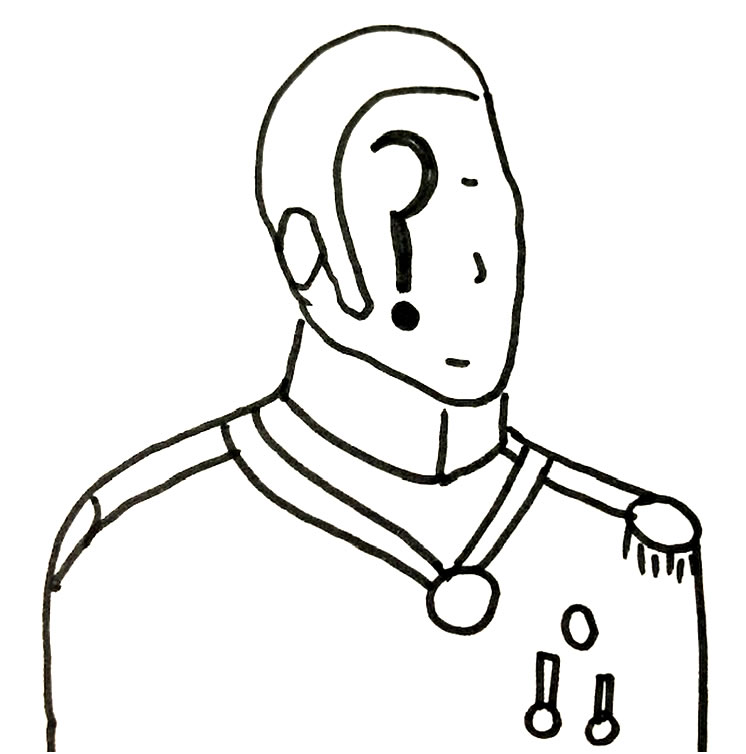
Estomba was born in 1790 in Montevideo, Banda Oriental (now known as Uruguay). His mother, Pascuala Tadea Mitre, was aunt to president Bartolomé Mitre, making Estomba Mitre’s first cousin. His whole family consisted of patriots.
His brother Juan Antonio was a soldier, and his other brother, Apolidoro, was a sailor. Both of them fought against the Brazilian Empire.
Estomba was primarily known as a soldier and military leader, who fought in the Argentinian Independence Wars.
At nineteen years old, Estomba began his military career and quickly became a distinguished soldier. At just twenty-one, he was appointed Lieutenant Colonel during the Upper Peru Campaign under the orders of General Balcarce.
From 1811 to 1813, Estomba fought in several battles with General Manuel Belgrano. While fighting for the independence of Argentina and Bolivia, he was seriously wounded during a battle called Ayohuma.
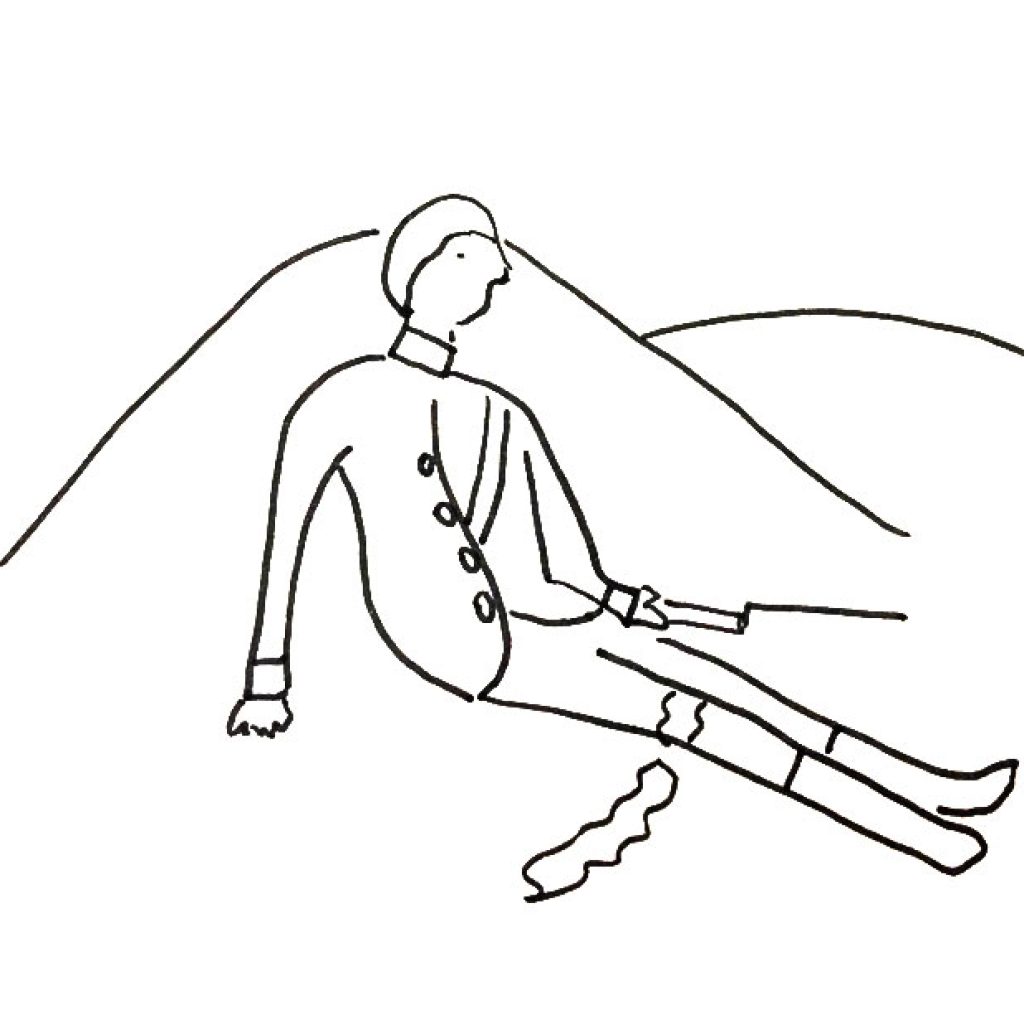
After Estomba’s injury, two native soldiers took care of him and healed him.
However, he was soon taken prisoner by the Spanish and spent seven years in the Callao penal colony, where he was not allowed to see daylight.
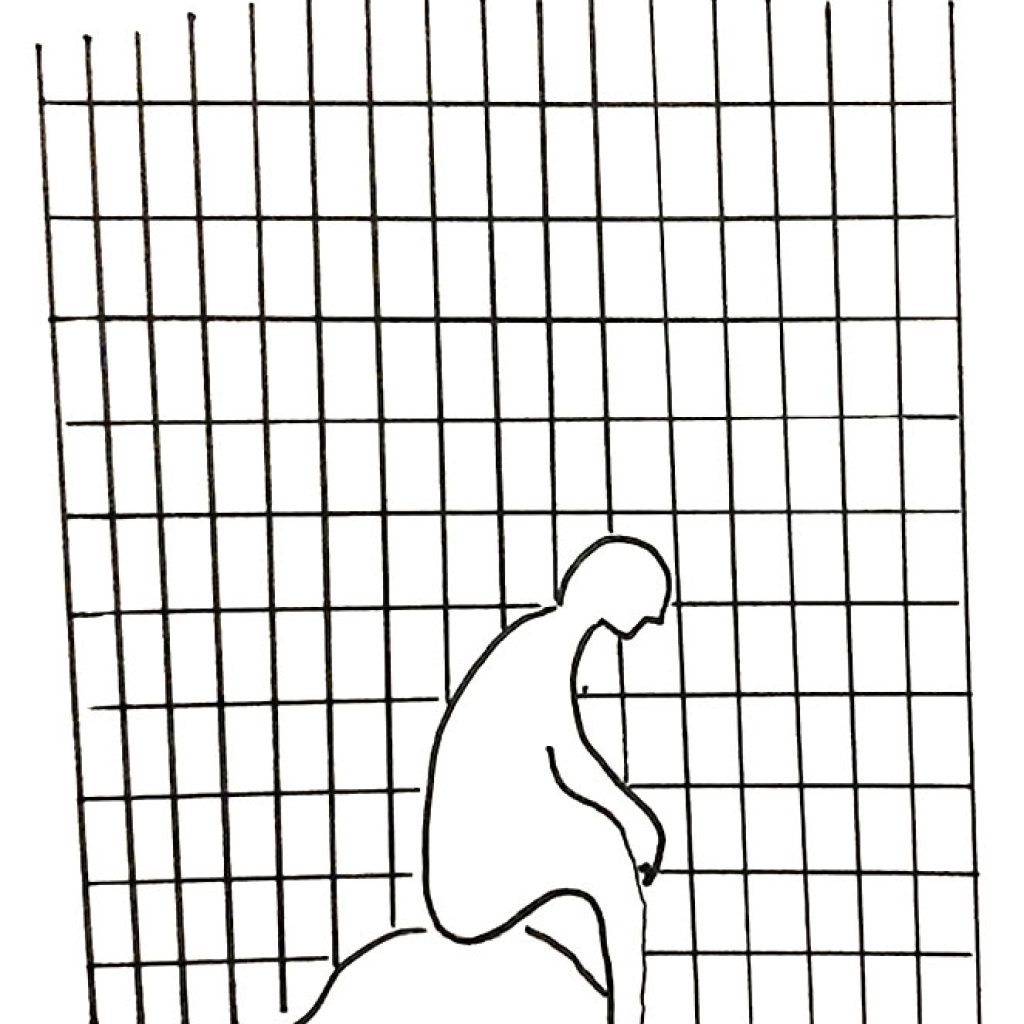
Estomba wrote a song about his friends who died helping him in his escape from prison. Later, the song became popular with the military.
In 1820, he was freed from the Callao prison by San Martin and was incorporated into the Mounted Grenadiers Regiment, José de San Martin’s army, to continue the fight for independence.
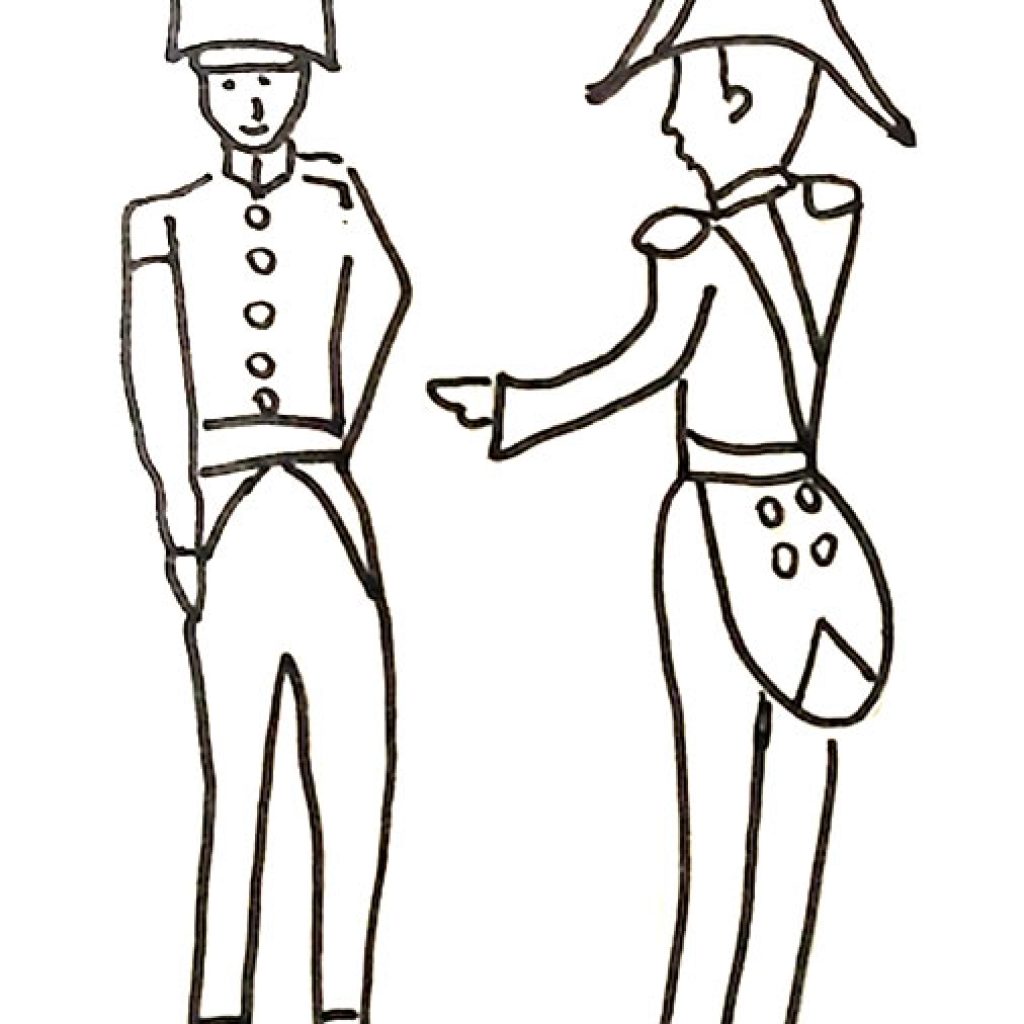
He participated in the invasion of Lima and Callao. In 1824, Estomba was briefly captured again by royalists after being sent on a mission in the north of Lima but managed to escape shortly afterwards and rejoined the army, this time under Simón Bolívar.
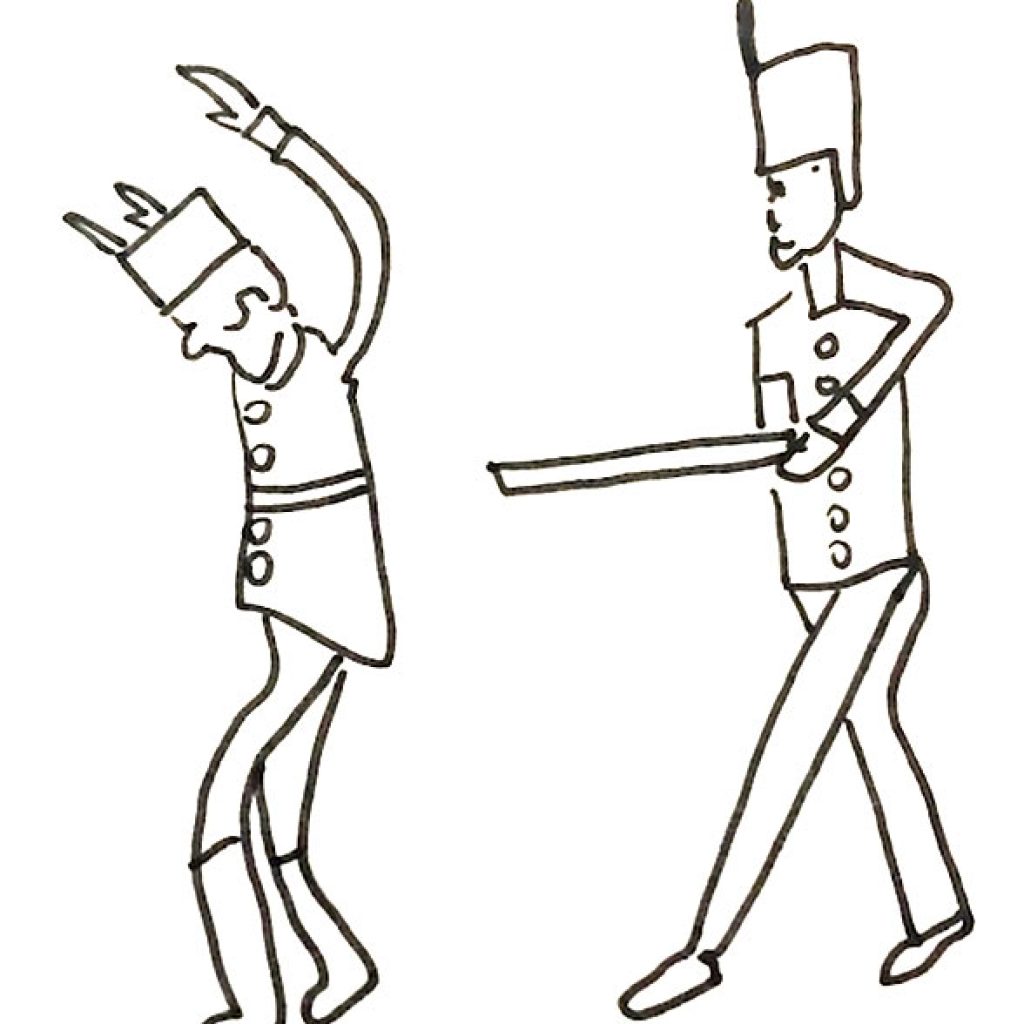
In 1826, Estomba was charged with treason against Bolívar. Even though he was innocent, he was still exiled from Perú. After returning to Argentina, he re-joined the Army.
Later, in 1827, Juan Ramón Estomba was named Colonel of the 7th Cavalry Regiment by President Bernardino Rivadavia.
In 1828, the Minister of War and Navy, Juan Ramón Balcarce made Colonel Estomba commander of the founding expedition of a fortress. This would protect and secure the southern border line from the natives and the Brazilians, who were trying to establish a settlement in Carmen de Patagones.
His army during this expedition was made up of many different ethnicities including;Criollos, Bonaerenses, Tehuelches, Africans, Araucanosand Europeans.

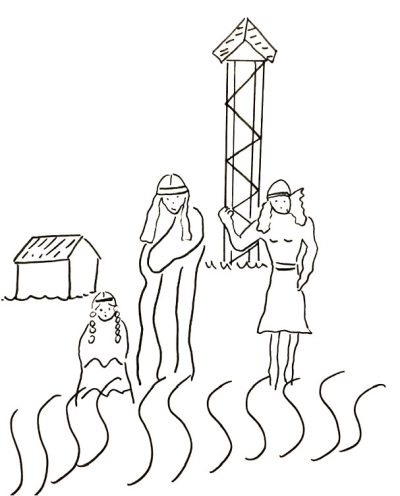
The Tehuelches wanted to be a part of Argentina, so they helped Estomba to pass through their territory and even helped him build the “Fortaleza Protectora Argentina.”
The royalist “pincheiras” were a Chilean army who attacked the “Fortaleza Protectora Argentina.” The battle was bloody and many lives were lost.
The “pincheiras” also killed natives who were on good terms with the Argentinian settlement. One of them was cacique Tetruel. He was one of the caciques of the Tehuelche people. He fought bravely against the royalist invaders but, in the end, the “pincheiras” killed him and many members of his tribe.
The people at the “Fortaleza Protectora Argentina” realized that they needed to let the natives come into the fortress or else the Chileans would massacre them.
Argentina entered a war with the empire of Brazil, between the years of 1825 and 1828, due to a dispute about the territory of the Banda Oriental. The Brazilian forces tried several times to conquer key parts of Argentina, and one such attempt occurred in Carmen de Patagones where they tried to seize territory but the locals managed to repel them.
Due to the potential danger of a future invasion through the south of the province, Juan Manuel de Rosas insisted on the construction of a fort that would act as a stronghold against invasions from the Brazilian empire. He revisited a project that was first started by Bernardino Rivadavia named “Fortaleza Protectora Argentina.”
Fortaleza Protectora Argentina
Estomba commissioned Narciso Parchappe, a French surveying engineer delegated by the government of the Buenos Aires province, to visit the area of Bahía Blanca in order to choose the most suitable place for the construction of the fortress. Cacique VenancioCayupán and his men accompanied and protected him.
The expedition started on 22nd March 1828. It was composed of approximately 800 fighting men including infantrymen, artillerymen, guides and friendly natives, families, carters, buildersand suppliers of essential resources.
On 11th April 1828, the whole expedition arrived in the area chosen by Parchappe. There, Colonel Ramón Estomba, Lieutenant Colonel Andrés Morel, Sergeants Narciso del Valle and Juan Elías, and Captain Martiniano Rodríguez, together with founding partners Nicolás Pires, Pablo Acosta and PolidoroCoulin, all agreed that they had reached the right place. The location was ideal thanks to its proximity to the coast and to rivers, as well as its pastures and fertile land, which would support them for many years.
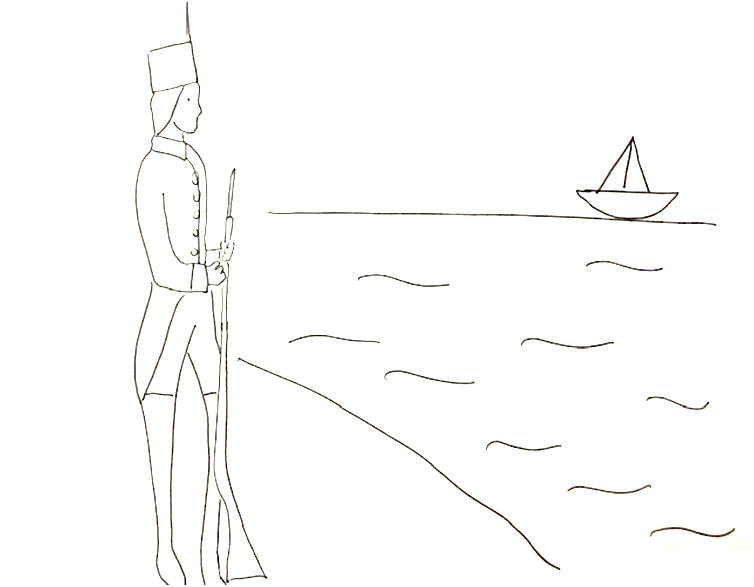
Bahía Blanca means “White Bay,” and the name comes from the colour of the salt covering the shores. The bay (which stems from an estuary) was first seen by Portuguese explorer Ferdinand Magellan during his first voyage around the world in 1520. Magellan, on the orders of Charles I of Spain, was looking for a passage connecting the Atlantic to the Pacific Ocean along the coasts of South America when he discovered the bay.
Founding the City of Bahia Blanca
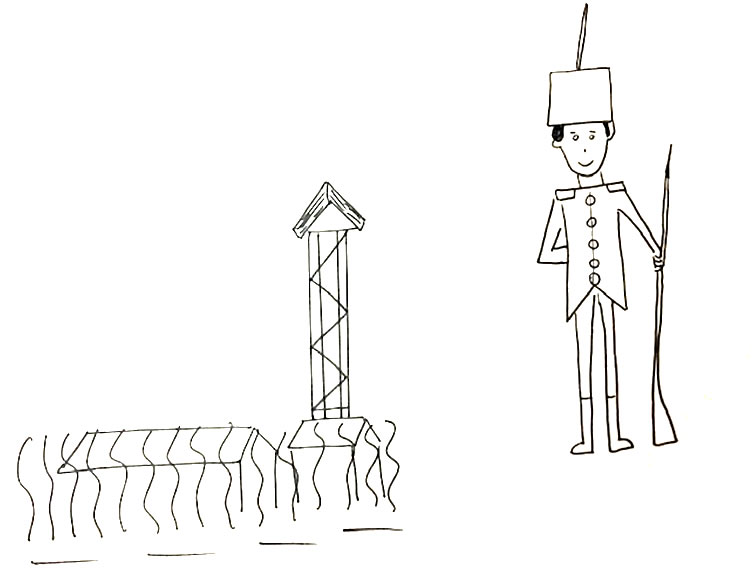
The construction of the fortress and another small fort concluded in August 1828, four months after the arrival of the expedition. Estomba named these buildings “Fortaleza Protectora Argentina” and “La Esperanza”, respectively.
The fortress had a strategic shape. It was built in the shape of a star, with four bastions in each corner to serve as sentry boxes, to have a better view of the area and defend the fort against attacks from natives. It had an angled structure that deflected cannon fire. A crucial part of the defensive construction were the moats, which is why two very deep ones were built around the fortress.
This was built as a colonial mission into native territory: land which had belonged for many centuries to the local tribes and ethnicities.The natives felt attacked by the military expedition, and because the colonists made little effort to communicate with them, it resulted in conflict.
The area in which the “Fortaleza Protectora” was built is surrounded today by the following streets: Vieytes-Brown, O’Higgins, Moreno and Estomba-Chiclana.
Around the fortress, little by little, a small town settled and grew. The government of the province gave it the name of Nueva Buenos Aires, but the people called it Bahía Blanca, which became its present-day name.
Nothing was easy for Estomba and his expedition: they were attacked by “malones” repeatedly and they suffered from hunger and cold. The “malones” were groups of natives who resisted the Criollo invasion of their territories and attacked forts and settlements. Also, the government in Buenos Aires didn’t give enough support to the Fortaleza. For all these reasons, Colonel Estomba asked for help from the government of Buenos Aires.
Having spent less than a year at the fortress, Juan Ramón Estomba wanted to fight in the Civil War, so in January 1829, he gave command of the town to Lieutenant Colonel Andrés Morel and left to join the forces of General Lavalle in Tandil.
The Last Years of “Demóstenes”
Estomba was showing symptoms of the last stage of syphilis, an illness that has the ability to seriously affect one’s mental health, even causing hallucinations. Sometimes, during an expedition, Estomba sent his men to fight enemies that only actually existed in his mind. Frequently, he used his sword against these invisible enemies. It was clear that as a consequence of his syphilis, Estomba was suffering from the last stage of dementia, affecting his decisions., Feeling exhausted from his orders, his soldiers were now not able to continue to fight.
At one point as a result of his state of mind, Estomba decided to change his name to Demostenes Estomba and commanded an attack against an enemy that was only another one of his hallucinations until Lavalle heard the rumours and decided to send Estomba to Buenos Aires to receive medical attention for his condition.
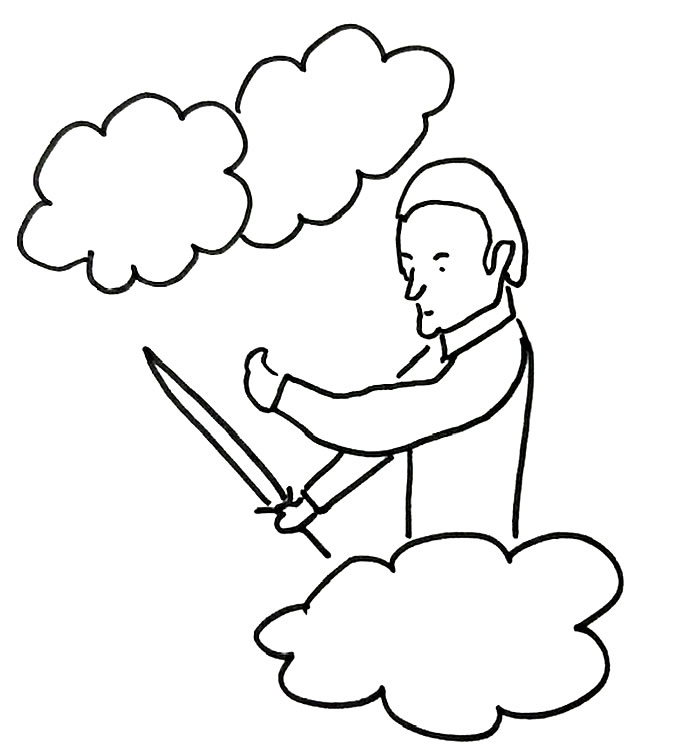
According to local newspapers, at the time of his stay in hospital, Estomba’s possible return to society was seen as a threat to the local population because of his constant attempts to fight imaginary enemies. Doctors and those who knew him kept faith and believed he would recover and be fit enough to command his troops once again, however, this never happened. Although it was always thought by his soldiers Estomba would die in the battlefield, he died after a long battle with syphilis instead. During his stay in hospital, doctors would sometimes let him leave for a walk, however one day, he went on one of these walks but never returned, dying as a result of his illness with his body being found by a police officer.
He was buried in the Cementerio del Norte, today called Recoleta, in Buenos Aires.More than a hundred years later, people from Bahía Blanca attempted to bring his remains to the city he had founded, but as they could not easily be identified after 150 years, dirt from his grave was taken and put in an urn instead. This urn is now in the Cathedral of Bahía Blanca. Beruti claimed that Estomba had died after being poisoned by Martín Rodríguez.
Estomba always swore to fight Rosas to death and beyond.
Glossary
Upper Peru, orHigh Viceroyalty of Peru, is a name used for the land that was governed by the Real Audiencia of Charcas. The name originated in Buenos Aires towards the end of the 18th century after the Audiencia of Charcas was transferred from the Viceroyalty of Peru to the Viceroyalty of the Río de la Plata in 1776.It comprised the governorships of Potosí, La Paz, Cochabamba, Chiquitos, Moxos and Charcas (since renamed Sucre).
Friendly natives/Indios amigos: groups of indigenous people, led by Caciques, who maintained a peaceful relation with the government of the Buenos Aires province. They would collaborate in a formal relationship of subordination with the military administration authorities of the border.
Cacique: the chief of a native tribe.
Malones:groups of natives who resisted/rejected the Criollo invasion of their territories attacked forts and settlements. These attacks were called malones.
Bibliography and Webography
Crespi Valls, Antonio. “El Coronel Ramon Estomba, Fundador de Bahia Blanca.”
Documento para la historia de Bahía Blanca. Ministerio de educacion de la nacion, instituto tecnológico del sur.
Echagüe, Jean Paul. “Hombres y episodios de nuestras guerras: Paz, Acha, Lavalle, Estomba, Lamadrid. El drama de Barranca Yaco.” Buenos Aires: Sopena Argentina. 1941. Print.
Literas, Luciano. «¿De qué hablamos cuando hablamos de tribu de “indios amigos”? Política, militarización y parentesco en la tribu de Tripailaf (Pampa y nor-Patagonia, décadas 1860-1880)», Corpus [En línea], Vol 6, No 2 | 2016, Publicado el 02 enero 2017, consultado el 15/06/22. URL: http://journals.openedition.org/corpusarchivos/1639
Ministerio de Educación de la Nación, Instituto Tecnológico del Sur, Documento para la Historia de Bahía Blanca, 2. Bahía Blanca, República Argentina. 1952. Print.
Puliafito, Etelberto César, La Bahía Epica. Historia de la bahía Blanca desde los orígenes hasta el fin del periodo rosista. -1a ed. Buenos Aires: Diario La Nueva Provincia, 2010.
Wikipedia contributors. “Bahía Blanca.” Wikipedia, The Free Encyclopedia. Wikipedia, The Free Encyclopedia, 28 Mar. 2022. Web. 8 Jun. 2022.
Yaben, Jacinto, Biografías argentinas y sudamericanas. Buenos Aires: Metrópolis, 1938-40. Print.
STORY 3
For English language learners (B1+ levels) developed and written by Rodrigo Cepeda, Guido Torrez and Ider Garcia from Instituto Superior “Juan XXIII”, Bahía Blanca, Argentina, and edited by Beth Sole from the University of East Anglia, UK.
Geology and Teresa Manera
What is geology?
Geology is the study of the Earth’s history, physical features and the organisms that live on the Earth. An important part of this study research is how these organisms have changed over time.
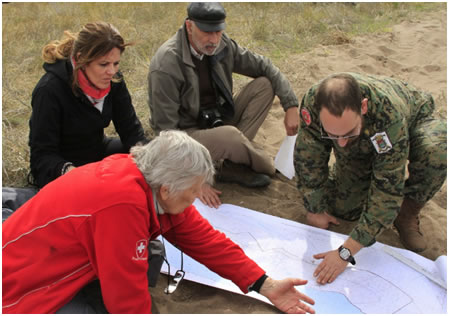
Geology is an important science because it answers questions about the Earth’s present shape and form and helps us understand the global climate and state of the environment.
Some geologists study rocks and minerals, focusing on how they are formed, while others study fossils, which are the traces of prehistoric plants and animals. Those who study fossils are called palaeontologists, rather than geologists.
Teresa Manera
Teresa Manera is an important and internationally recognized geologist from Bahía Blanca.
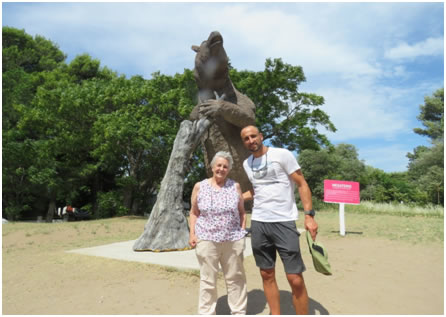
She studied geology at Universidad Nacional del Sur (UNS). Her family influenced her decision to pursue this career, as her mother and father liked nature and observing plants and bugs, and her grandfather liked studying rocks and had lots of books about animals.
Manera lived in Bahía Blanca until she married, then she moved with her family to Punta Alta.
Manera and her husband went to the beach every weekend, as Teresa´s father had a house in Pehuen-co. One day, the couple found a fossil shell of a Glyptodont, which they gifted to the University they also found fossil footprints of extinct mega fauna.
Preservation Project
Teresa Manera proposed a project to promote the preservation of fossils such as mammals’ footprints. This was because they were in an area that made them vulnerable to destruction, as many people drove their vehicles nearby. This included the beaches of Pehuen-co and Monte Hermoso.
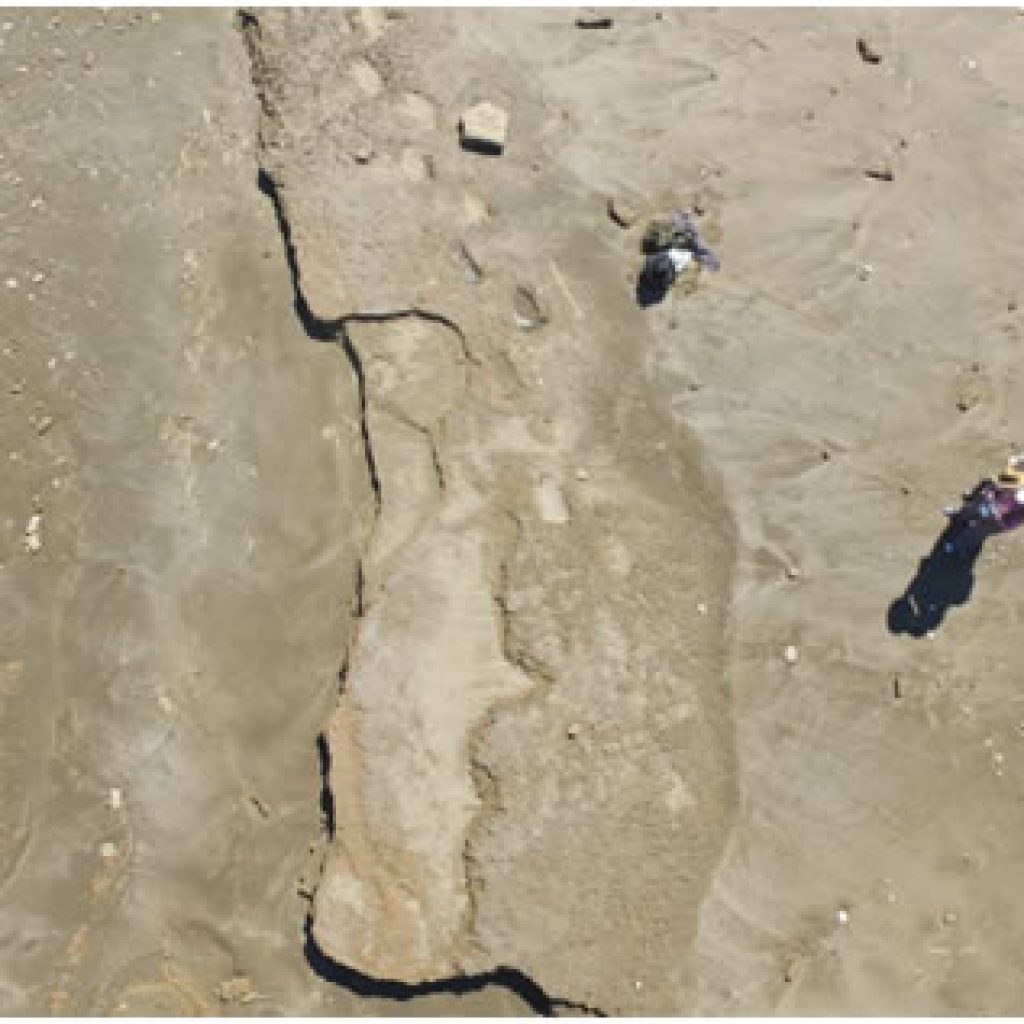
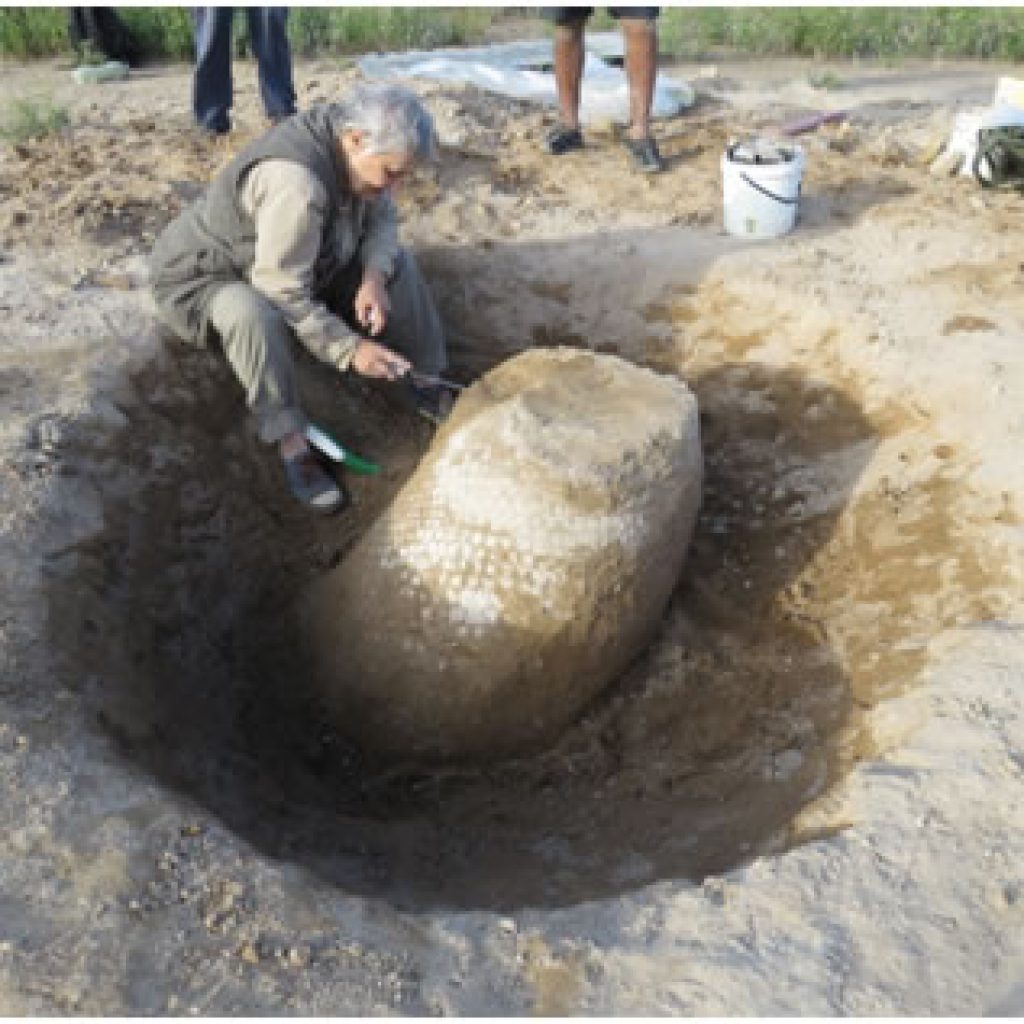
At first it seemed impossible to protect the area, so Manera tried to make copies of the fossils. She won the Rolex Award, which made her a well-known scientist.
This caught the attention of the local authorities who created the “Reserva Natural Provincial”.
Rolex Award
The Rolex Award is a prize given to scientists to finance their projects.
Manera and four others were chosen from 17,000 other scientists for this award. When she and her husband were invited to a conference in Paris for the ceremony, they were given a great amount of money to carry out their projects.
Manera is still being invited by the Rolex Association to many of these conferences.
 These awards are given to 5 important women scientists every year, from: Africa and the Arab States; Asia; the Pacific; Europe; Latin America, the Caribbean and North America. These awards are to recognize scientific accomplishment in a field normally dominated by men.
Argentine mathematician Dr. Alicia Dickstein won this award in 2021. Science is for all genders! YOU can be like Teresa Manera or Dr. Alicia Dickenstein!
Charles Darwin
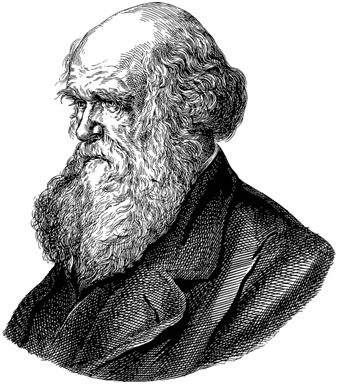 Charles Darwin was an English scientist who studied nature. He is known for his theory of evolution by natural selection; the idea that all living beings struggle to survive, and those that have the most helpful traits for their environment tend to be more successful.
These living beings then pass along their helpful traits to their young, and in this way, animals change, or evolve, over hundreds of years. He described his ideas in his book “On the Origin of Species by Means of Natural Selection” (1859).
In 1831, Darwin joined an expedition to explore the coasts of South America. On December 27th, Darwin and others set sail on their ship “HMS Beagle”. This voyage was commanded by the young captain Robert Fitzroy (1805-1865) and lasted approximately five years. He travelled around South America to collect information for his research. One of the places he visited was Punta Alta and the coasts of Pehuen-co.
On September 22nd, 1832, Charles Darwin arrived at Punta Alta. At that time, the city of Punta Alta, the naval base and the grove by the sea did not exist.
In Darwin ‘s time, from the entrance to the bay, a series of barracks and dunes could be seenalong the coastline. These were called “peaks.” One of these peaks was quite special and it was used by sailors as a reference for navigation.
A barrack was built on the peak and pointed towards the sea. On the ravine, a dune was visible from the water, a “high” characteristic which was mentioned by Darwin in his diary for the first time as “Punta Alta”. As the name was written in Spanish, it seems the place name was already in use and that it was not his invention.
When Teresa worked on her discoveries, the “Museo Municipal Carlos Darwin” museum of natural science had yet to be built in Punta Alta.
Florentino Ameghino found fossils of a marine crocodile of the Jurassic Period in the province of Neuquén, 1907. Ameghino then sent them to Arthur Smith Woodward, who worked for the Natural History Museum of London, to study.
In time, the fossils were forgotten about until Lorna Steel, who also worked for the Natural History Museum of London, looked at the historical records a century later. She debated what to do with them. If the findings had been published by Smith Woodward at the time of the discovery, it would have been the first of its kind for South America. It was eventually decided that the fossils should return to Argentina and, in 2015, they were transported from London back to Argentina.
What do you think about this? Do you think fossils should stay where they were discovered? Why is it so important for the place the fossils were discovered to be acknowledged?
Did you know….?
In 2003, there was a law passed that international researchers could not take any discoveries from Argentina without collaboration with a researcher from Argentina. This advances research from being centred just around Europe!
The Darwin Project
This is a future project that Teresa Manera is working on. This is about finding the original barracks visited by Darwin. Scientists from London, who are very interested in this project, will be helping Teresa carry it out.
Species
Toxodon
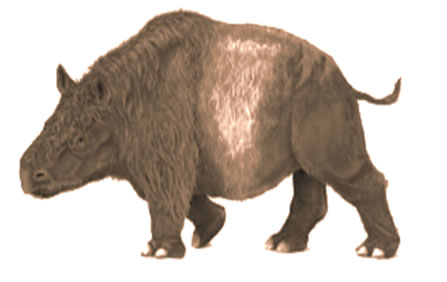 The name means “bow tooth” in reference to the curvature of its teeth.
- It is one of many extinct orders of hoofed mammals from South America.
- It was probably the most common large-hoofed mammal in South America at the time.
- Charles Darwin was one of the first to collect Toxodon fossils, after receiving a skull from a farmer in Uruguay.
- The Toxodon was about 2.7 m in length with an estimated weight of 1,415 kg.
- It was a herbivore.
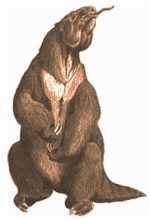
Megatherium
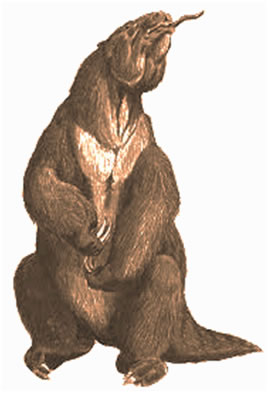 The Megatherium is an extinct mammal native to South America.
- It is a distant relative to the sloth.
- It was a herbivore.
- It could feed at heights unreachable by other herbivores due to its size.
- The Megatherium Americanumis considered one of the largest mammals in history, weighing up to 4,000 kg and measuring up to 6 metres in length from head to tail. It is the largest-known ground sloth to have lived and was as big as modern elephants.
- The giant ground sloth lived mostly in groups, but it may have also lived alone in caves.
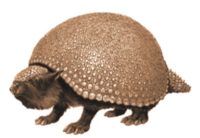
Glyptodon
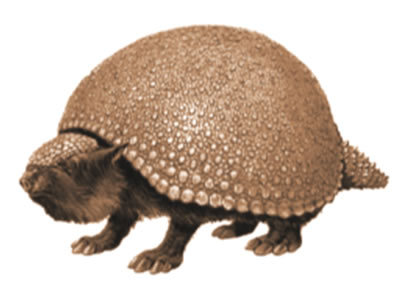 This is another species of mammals with a signature appearance of a rounded, bony shell and tiny limbs.
- The Glyptodon is related to the family of the modern armadillo.
- Its tail was its main method of defending itself against predators.
- It was a herbivore.
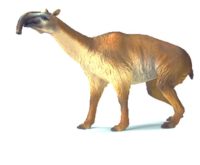
Macrauchenia
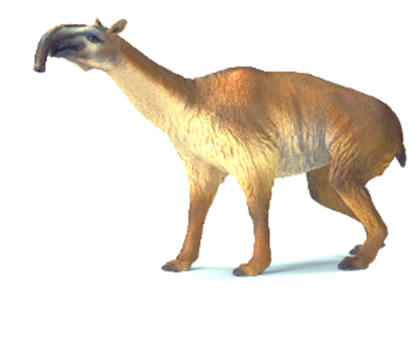 The long neck was the main characteristic of this three-toed mammal.
- It resembled a camel without humps more than a llama.
- It was a herbivore.
- It was found in Port St Julian by Charles Darwin during his expedition in South America.
Activities
1. Match the sentences with thecorrect pictures:
a) It is considered one of the largest mammals in history, weighing up to 4,000 kg.
b) The long neck was the main characteristic of this mammal.

c) It has a rounded, bony shell with tiny limbs.
d) It is from South America and its name means “bow-tooth”.
2. Find the following words in the word search:

3. Imagine you discover the fossil of an animal. Draw the animal and name it.
Bibliography
Megatherium – Description, Behaviour, Habitat, Fossils and Evolution vedantu.com web 6 July 2022
What was Megatherium? | Pip,Brewer Natural History Museum nhm.ac.uk web 6 July 2022
Glyptodon – walking fortress dinoanimals.com web 6 July 2022
Glyptodon – Structure, Anatomy, Diet, Behaviour, Eyesight and Predationvedantu.com web 6 July 2022
Toxodon | extinct mammal genus |EncyclopaediaBritannica Online web 6 July 2022
Toxodon – one of the strangest animals | DinoAnimals.com Web 6 July 2022
What was Macrauchenia? | Natural History Museumnhm.ac.uk Web 6 July 2022
Macrauchenia | Fossil Wiki | Fandom Web 6 July 2022
Manera, Teresa Interview byGarciaIder Lautaro and Cepeda Rodrigo Onofre 27/04/2022
Charles Darwin Wikipedia web 6 July 2022
A long way back home Conicet.gov.ar 15 December 2015 web 6 July 2022
STORY 4
For English language learners (B1+ levels) developed and written by Ana Sgarbossa, Erika Mamani and Sofía Luayza from Instituto Superior Juan XXIII, Bahía Blanca, Argentina, and edited by Cathy Sole from the University of East Anglia, UK.
Natty Petrosino: Argentina’s Mother Teresa

Early life
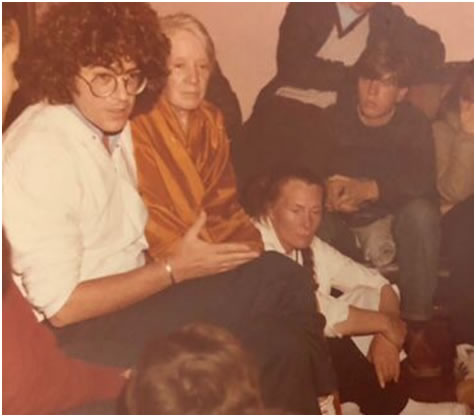
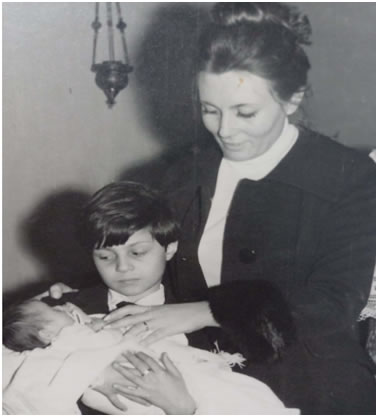
Natty Petrosino lived two lives: one full of fame and luxury, and one of service and devotion to God.
In 1938, Natty Hollman was born in Jacinto Arauz (La Pampa, Argentina). At the age of seven, she moved to a wealthy neighbourhood in Bahia Blanca, surrounded by cooks and maids who took care of her every need.
In the 1960s, Hollman started studying Medicine and Sociology at the University of Buenos Aires. However, she never graduated because she went into modelling instead. She ended up becoming an incredibly successful model and actress, befriending powerful personalities of the time, such as Sandro, Antonio Piero, and Susana Gimenez.
Hollman met a businessman from Bahía Blanca, Vicente Petrosino. She married him to become Natty Petrosino, and they had two children together: Jorge and Fabián.
Natty Hollman’s full name was Inocencia Rosa Hollmann. Her parents wanted to call her Natasha, but the authorities didn’t allow them. Despite this, everyone still called her Natty, short for Natasha.
God’s calling
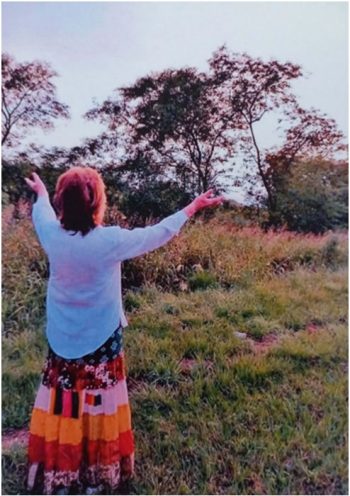
At the age of 27, Natty Petrosino was diagnosed with ear cancer. During surgery, her heart stopped and she was clinically dead for a few seconds, during which time she had a vision that changed her life.
In her vision, Jesus came to her and said ‘Go back and prove to the world that death doesn’t exist’. He told her to help those most in need, and in return Jesus would always make sure that she was assisted by the people around her.
Her journey starts
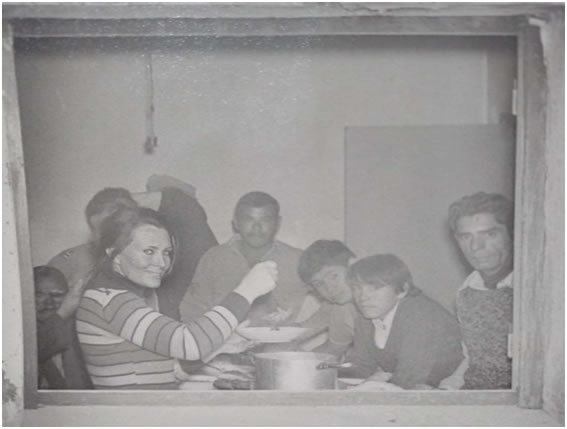
Petrosino began her mission helping homeless people at her house in Barrio Palihue. She fed, clothed, and prayed with the homeless people, helping them to get back on their feet.
Petrosino and the citizens of Bahía Blanca organised fairs where people brought clothes, furniture, and household items to give to those in need. Each of these fairs had over 3,000 attendees.
After several years of philanthropy, something unexpected happened to Petrosino on her birthday: she had another vision from Jesus, telling her to open the first cotolengo (a catholic home for the physically and mentally disabled) for men in Bahia Blanca.
Natty obeyed Jesus’ command and repaired an abandoned church, turning it into the Hogar Peregrino San Francisco de Asís cotolengo.
As a restless defender of human rights, Natty also helped in prisons, as she noted prisoners were living in subhuman conditions, where they weren’t being fed properly or receiving medical attention.
Natty Petrosino and her team never had to pay for anything. The resources they used all came from donations from people who believed in her cause.
New horizons
Petrosino’s charity work continued in other parts of the country when she decided to leave Bahía Blanca to assist the poor in some of the most remote places in Argentina. She travelled to Chaco, Mendoza, Tucumán and Formosa with the purpose of helping the most disadvantaged native communities.
One of her most notable projects was carried out in Formosa, where she had to live in a tent for several months in order to be accepted by the Wichi community.
In 1996, after she was finally welcomed by the community, Petrosino and a few other volunteers built houses, a hospital and a school. They eventually founded a new settlement called Barrio Bahia Blanca.
In 1993, the Russian ambassador invited Petrosino to speak about her experiences helping those in need. She prayed to Our Father in front of hundreds of people, many of whom were soldiers. This was considered to be of great historical importance to her followers.
In 1993-4, she travelled to Kazakhstan, Moscow, and Chernobyl to help people affected by the nuclear disaster. She also travelled to Nicaragua to help those that were left homeless by Hurricane Mitch in 1998.
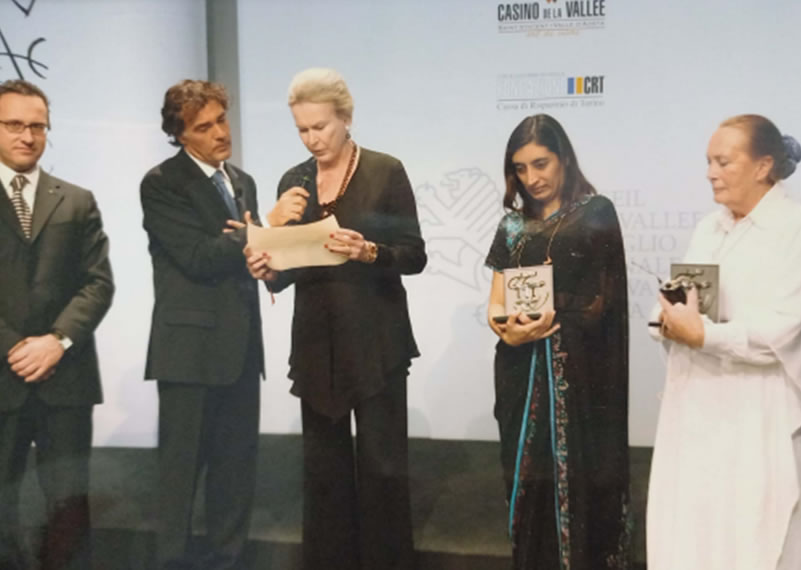
Natty Petrosino’s work also received several awards. In 2012, she was awarded the International Prize Jaime Brunet in Spain. When she was there, she received a call from Pope Francis. He congratulated her and invited her to the Vatican, but she decided not to go. She said the poor are waiting for her.
She was also nominated for the Nobel Peace Prize in 2009.
Death and legacy
Until her final days, Petrosino continued to work relentlessly. During the COVID-19 pandemic, she went on helping and taking donations to the native communities in Formosa, despite the restrictions. She had to sleep on the floor until Formosa’s strict sanitary restrictions were dropped.
Petrosino returned to Bahía Blanca briefly with the intention of going back to Formosa with even more donations. However, on July 26th 2021, Natty died of Coronavirus at 83 years old.
Her passing was mourned not just by family and friends, but by people all over the world. She, however, wasn’t scared of death. Before she died, she told her family: “I’m happy and willing to meet God”.
While Natty has left the world physically, her presence is still with those who loved her and those she helped and inspired. Nowadays, many of her collaborators (among them her adopted son Juan Francisco) keep her legacy alive by receiving donations and visiting the communities Natty fought for her entire life.
Activities
Vocabulary
Match the words with their corresponding definition
DEVOTION
something that is left behind and remains an important part of history
BUSINESSMAN
giving to a purpose or cause benefiting other people.
WEALTHY
a person who lives in the streets
HOMELESS
a man who works in commerce or industry.
PHILANTHROPY
Something that keeps going without stopping
SUBHUMAN
someone who was born in a particular country or place
NATIVE
someone who works in an organisation without getting paid
VOLUNTEER
poor human conditions
AMBASSADOR
an important official who works in another country representing his or her own country
LEGACY
Rich
RELENTLESS
religious worship, especially prayers
True or False
Are these sentences true or false? Correct the false ones.
- Petrosino was a famous model
- Petrosino’s family was poor
- Petrosino had a vision of Jesus
- Petrosino paid for the resources with her own money
- Petrosino visited Hungary and Brazil
- Petrosino won the Nobel peace prize
Order the Information
Put the sentences in order of when they happened and add the years.
Petrosino died of Coronavirus at 83 years old. ___________
Petrosino received the Jaime Brunet award in Spain. __________
Petrosino travelled to Kazakhstan, Moscow and Chernobyl. __________
Petrosino became a successful model and actress. ___________
Petrosino collaborated in Nicaragua after the Mitch Hurricane __________
Petrosino was born in Jacinto Arauz, La Pampa. ___________
Critical Thinking
Get together in groups and discuss:
- What challenges do you think Natty faced as a woman of her time? Do you think the transition from being an actress to a philanthropist was difficult? Why/Why not?
- What do you think was her greatest achievement in the city? Find out if her legacy still lives on in Bahia Blanca.
- Why do you think it’s important that she helped the native communities? Do you think these communities are treated fairly nowadays?
Bibliography and sources:
Interview with Juan Petrosino and Zulema Governatori, Bahía Blanca, April 22nd, 2022.
STORY 5
For English language learners (A2-B1 levels) developed and written by Julieta Martín, Julieta Gil and Micaela Barros from Instituto Superior Juan XXIII, Bahía Blanca, Argentina, and edited by Finlay Porter from the University of East Anglia, UK.
From Bahía Blanca to the NBA: Manu Ginóbili
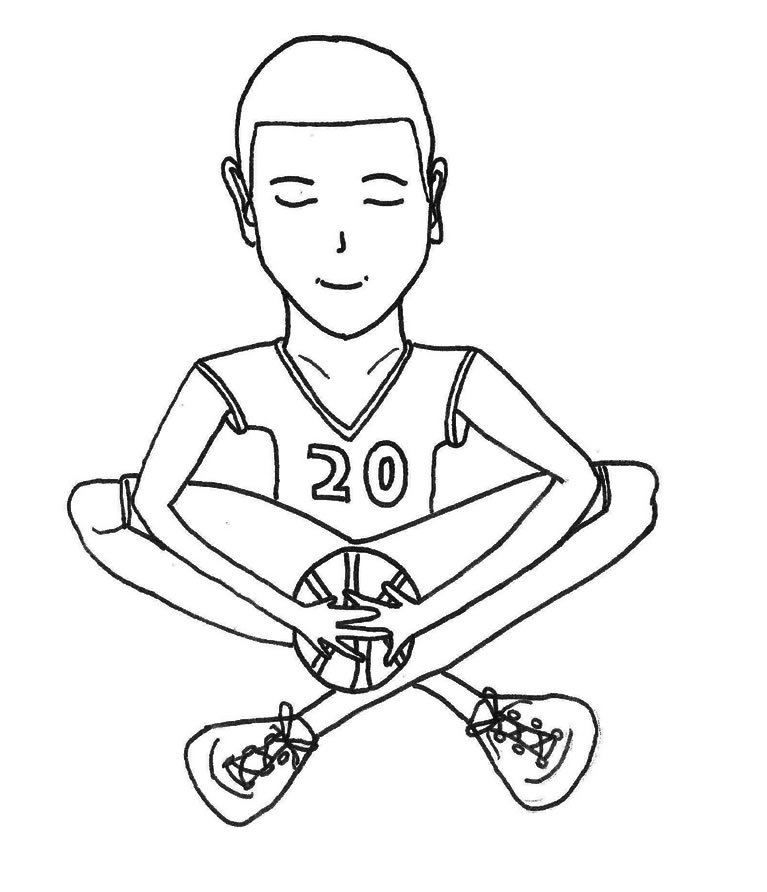
Who is Manu Ginobili?
Early life
Emanuel David Ginóbili is a retired professional Argentinian basketball player. He was born on 28th July 1977, in the city of Bahía Blanca, Buenos Aires, Argentina.
Emanuel grew up very influenced by basketball. His father, Jorge Yuyo Ginóbili, dedicated his life to basketball, and worked as a coach at Bahiense del Norte club. This was where Manu and his two elder brothers learned how to play. He felt that he had to play basketball, the sport of his family, which he would love, eventually.
Do you think basketball is a sport that everyone can play?
Manu went to Escuela N°6 Julio Argentino Roca. Half of the time he was at school, and the rest he was at the club. He took his first competitive steps at the age of eight in the “mini” category. He feared not being as good as his father and brothers, so he would always compete against his older brother Leandro. He was also worried about not being as tall as he hoped.
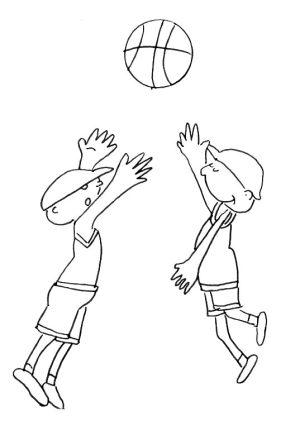
Do you know any female basketball teams?
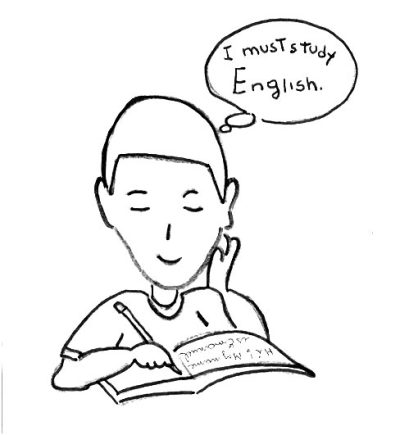
His mother, Raquel, only let him play basketball on two conditions: firstly, he had to study English. He liked studying and learning, so that was not a problem; he even sat the Cambridge exams. Secondly, he was stopped from playing in the backyard because he could damage her plants. This was why the family never had a basketball hoop in the house.
Do you watch women play sports?
In 1995, Ginóbili played his first professional game at the age of 18, at the club Andino of La Rioja, the city in which he finished secondary school.
He played in Estudiantes de Bahía Blanca and then in 1998 made his move to Italy.
He played for two teams: the Viola Reggio Calabria (1998-2000) and the Kinder Bolonia (2000-2002). He helped Kinder Bolonia win the Italy League (LBA) in 2001. He also played in two Italian Basketball Cups in 2001 and 2002, and the Euroleague in 2001. While he was playing in Europe, he won the ‘Most Valuable Player Award’ in Italy.

At the age of 22, Manu joined the United States’ National Basketball Association(NBA) after a draft in 1999, where he was the 57th selection for the San Antonio Spurs. H
e started playing in the 2002-2003 season but it took him some time to become as famous as he is today.
What sports chants do you know? If you don’t know any, can you make up your own for Ginóbili?
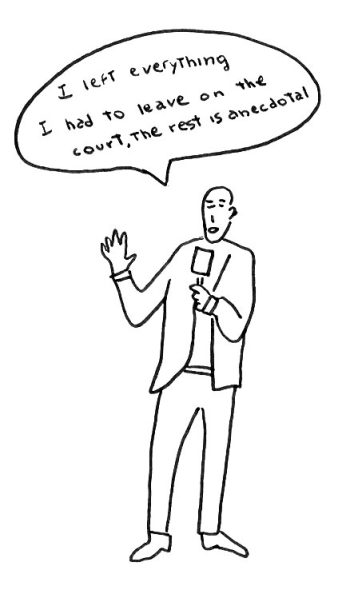
He suffered many injuries which made him consider leaving the NBA, but with constant dedication and a healthy lifestyle, he was able to continue playing.
He became one of the best non-American basketball players, winning 4 NBA championships and adding his famous offensive move to the history of basketball: the ‘Eurostep’.
This is where Manu tricks his opponents by starting to go in one direction, but then quickly changing into the other.
He played for the Spurs for sixteen years.
By the end of the 2017/18 season, he had gained a reputation as a symbol of National basketball, but he was reaching the end of his career. On August 27th, 2018, Ginóbili retired from the NBA.
In his farewell speech, which was very emotional, he said that he would find ways to help the San Antonio Spurs, the only NBA team that he had played for during his long career. The number 20, which was on his jersey during his NBA career, was retired from the team
Are some sports chants offensive? How can we make sure to celebrate without insulting anyone?
National Team Career
Ginóbili played for the Junior National Team of Argentina at the 1997 FIBA Under-21 World Championship. He played his first game for the senior team in 1998 at the FIBA World Championship in Athens.
In 2002, he helped his team win the silver medal at the FIBA World Championship. In 2004, at the Athens Summer Olympics, Ginóbili played very well, which led to Argentina winning the gold medal for the first time in 16 years.
Do you know what the national sport of Argentina is?
Do you know why some sports teams ‘take the knee’ before playing?
In 2006, he represented his national team at the FIBA World Championship before carrying the flag for Argentina at the 2008 Summer Olympics in Beijing, China. At those, Argentina won the bronze medal match against Lithuania. He then went on to represent Argentina at the 2012 and 2016 Olympic Games of London and Rio.
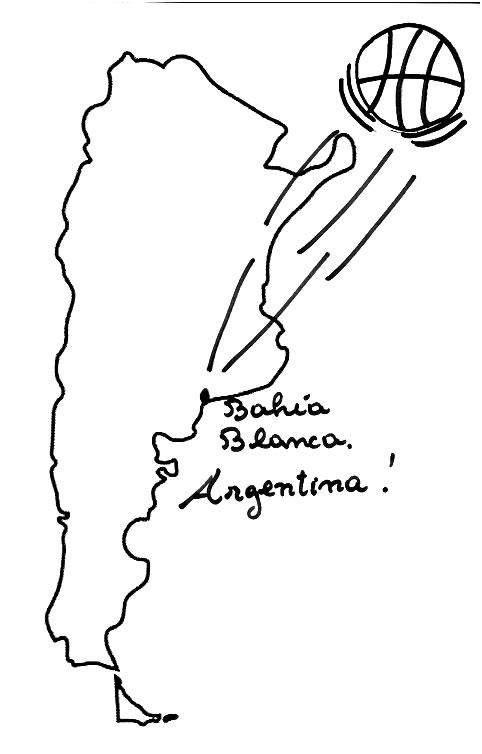
Present Life
Today, Emanuel travels around the world with his family.
He started to play different sports for fun but what he enjoys most is being with his wife, Marianela, and his three sons, Nicola, Luca, and Dante.
He lives in San Antonio, USA, where he works to help basketball players on and off the court.
During vacations, he often returns to Bahía Blanca and to Monte Hermoso, too.
Did you know?
- Manu used to play with another Bahiense NBA player, Pepe Sánchez, at Bahiense del Norte!
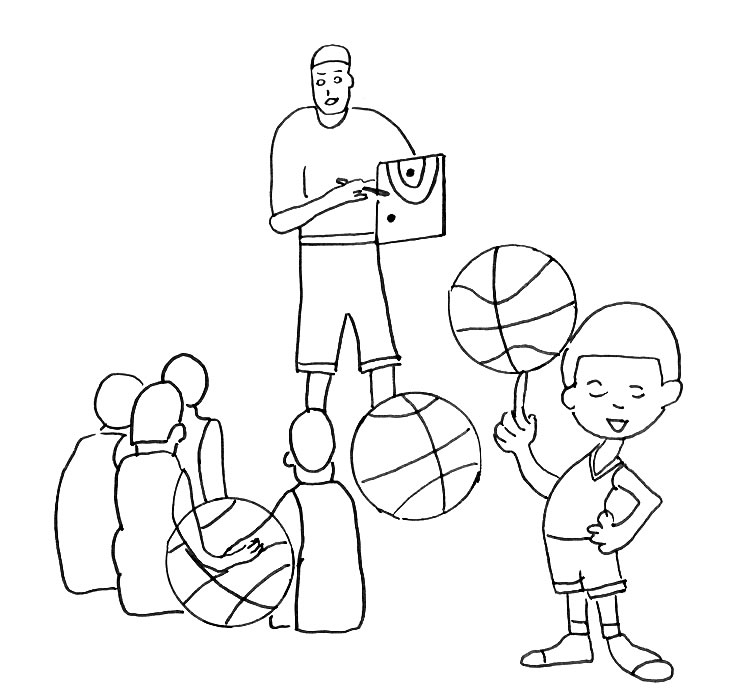
- His coach for a time at Bahiense del Norte was Sergio Oveja Hernández, the historical coach of the Argentinian National Basketball team!
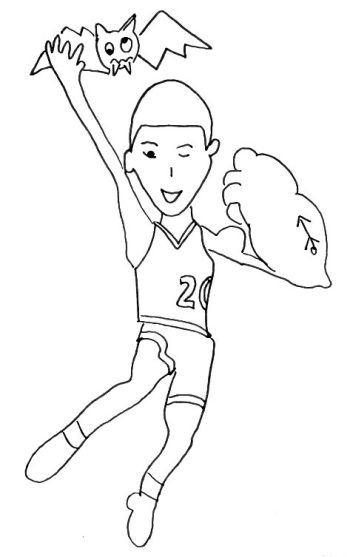
- One time, playing for the Spurs, he caught a bat while it was flying over the court!
- He is 1.98 metres tall, and he weighs 98 kilograms.
- As a child, he used to say that he would play in Brazil when he grew up, but he never did.
Glossary
English
Award
Bronze
Career
Choice
Draft
Gold
Healthylifestyle
Heavily
Injuries
Jersey
Silver
To change
To damage
To join
To spent
Valuable
Worried
Spanish
Premio
Bronce
Carrera profesional
Elección
Selección de jugadores
Oro
Estilo de vida saludable
Fuertemente
Lesiones
Camiseta
Plata
Cambiar
Dañar
Unirse
Dedicar / Pasar
Valioso/a
Preocupado
Activities
Match the events to the locations
Manu played the 2004 Olympic games in… Athens
He first moved to… San Antonio
He joined the NBA in 1999 for… Italy
Manu played the 2008 Olympic games in… Argentina
He was born in… Beijing
Read the following sentences and write T (for true sentences) or F (for false sentences). Correct the false sentences.
Manu was the first member of his family to play basketball. ______________________
He also liked computers and reading. ______________________
Manu started playing basketball at the age of eleven. ______________________
Ginóbili is the first Argentinian basketball player to reach the NBA Hall of Fame. ______________________
Manu retired after playing for San Antonio Spurs. ______________________
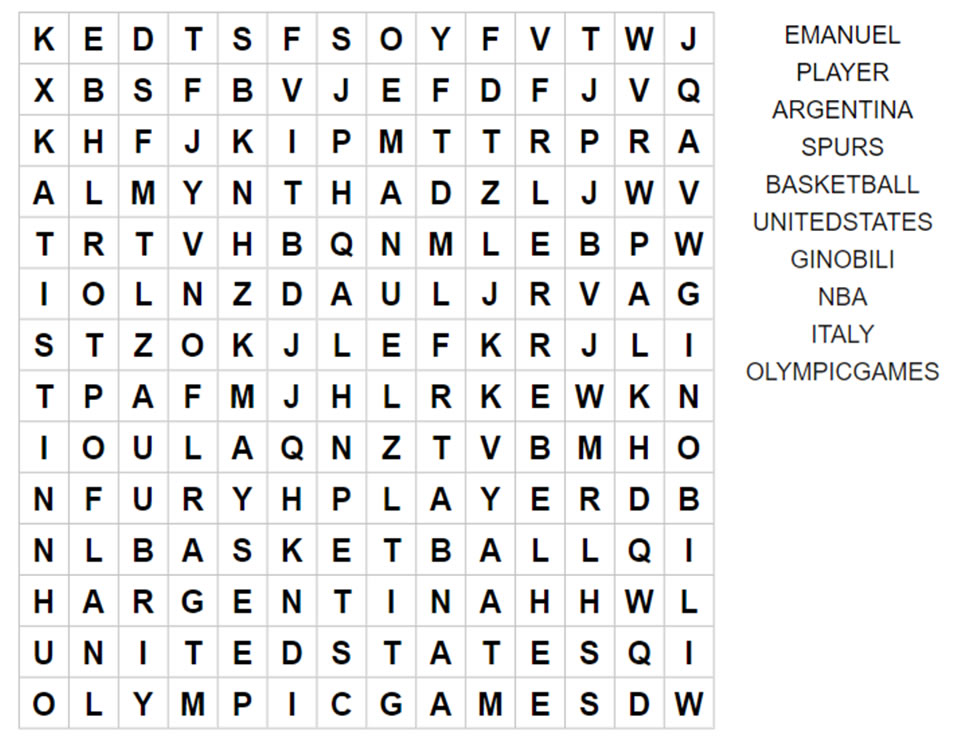
Find the following words in the puzzle. Words are hidde
Bibliography and Webography
Frescó, Daniel. Manu: El Cielo con las Manos – 1 a ed. – Buenos Aires: Aguilar, Altea, Taurus, Alfaguara, 2005. Print.
Gustavo Villarroel. La película de Manu Ginóbili: el niño que soñó, lloró, luchó y se convirtió en leyenda. [Online] Published on 3rd June 2020, accessed on 05/23/22
URL: https://www.losandes.com.ar/manu-ginobili-2/
Interview with Raquel Maccari, mother of Emanuel Ginóbili conducted by students from Instituto Superior Juan XXIII on 13th May, 2022.
Jacobo Correa Manu Ginóbili, un tipo de Bahía Blanca»,[Online] Published on 22th December 2016, accessed on 05/23/22
URL: https://www.spherasports.com/manu-ginobili-un-tipo-de-bahia-blanca/
STORY 6
For English language learners (A2+ level) developed and written by Triana Gonzalez, María Belén Rodríguez, Gisela Prost from Instituto Superior Juan XXIII, Bahía Blanca, Argentina, and edited by Cassandra Piejko from the University of East Anglia, UK.
Sergio Hernández
Sergio Santos Hernández was
born in Bahía Blanca on the
1st November, 1963. He is
known for being one of the
best Argentinian basketball
head coaches and has been
distinguished all over the world
for his psychologically-oriented
philosophy employed when
leading basketball teams.
But… How did he begin?

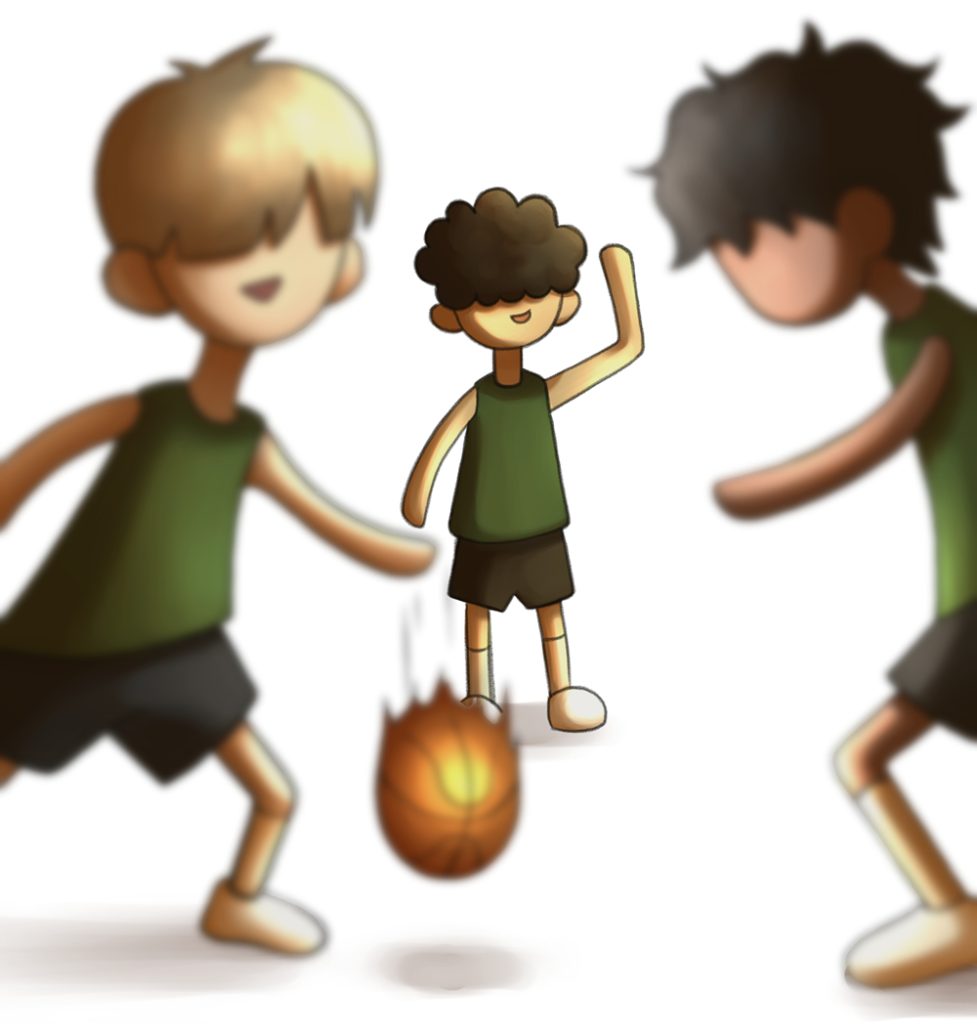
As a child, Hernández lived in Villa Mitre, a suburb in the east of Bahia Blanca with a football and basketball club only two blocks away from his house. Hernández started playing basketball at the age of 12. However, he only ever enjoyed training with the team, rather than actually competing with them. Every time his team would play a competitive match, he would simply go home. However, when Hernández was 13, he discovered the club Villa Mitre; a team he really enjoyed being a part of and felt he could socialise in, and so rather than going home, he would stay to watch them play.
Therefore, at the age of 14, after spending many games at the sidelines watching, Hernández already had the authority as a Villa Mitre basketball coach. Through having played basketball himself in the past, he understood that there are roles and hierarchies that must be respected, as well as rules, discipline and a need for solidarity. All qualities which made him a successful coach even at such a young age.

Interestingly, although he always loved basketball, his family had never been involved in the sport before, but he always felt the support of his parents. Growing up, his family often found it hard to make ends meet. His father was a salesman, and his mother took care of the household, but they all played their part in supporting and uplifting each other.
From the day Hernández was handed over the whistle and onwards, he remained a distinguished leader in sport. Although at first coaching was just a hobby, Hernández later decided to further study and take courses in order to become more competent at his job. Hernández started by taking coaching lessons in Buenos Ares, before then taking lessons with esteemed Yugoslavian coach, Ranko Zeravica, continuing to expand his knowledge.
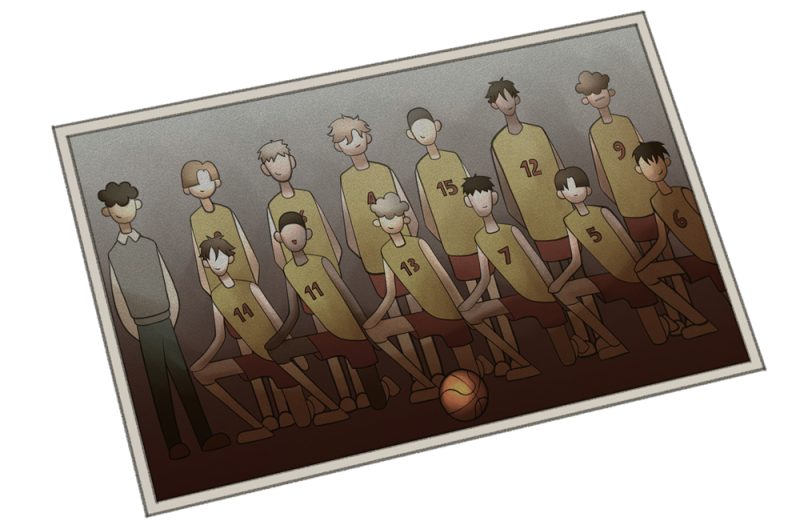
Upon returning to Bahía Blanca, Hernández signed with the sports club Bahiense del Norte, where he met the Ginóbili brothers, Pepe Sánchez, and Alejandro Montecchia, renowned former players in the Argentinian National Basketball Team.

In 1995, Hernández signed with Deportivo Roca, where he coached for two years, before then working as head coach in Estudiantes de Olavarria for four seasons, until he moved to Spain for a season, coaching the team Cantabria Lobos.
In 2003, Hernandez returned to Argentina, signing for Boca Juniors. He stayed in the country for many years, moving on to lead Peñarol de Mar del Plata from 2007 to 2013, where he played with Leonardo Gutierrez (another famed Argentine basketball player) and won four tournaments. By 2015, Hernández had worked in Brazil for UniCEUB, Puerto Rico for Piratas de Quebradillas and returned to Argentina to coach his beloved club Peñarol for a last season in 2015/16. His time as a club coach then finished in 2020, leading Casademont Zaragoza in Spain for one season.
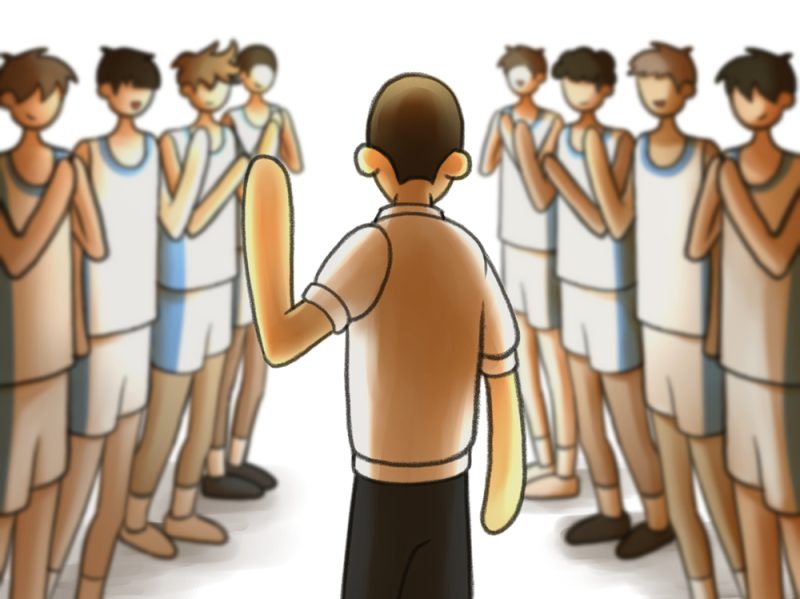
During his years as a club coach, Hernández also intermittently worked under the Argentina Basketball Confederation as the coach for the National Team. However, on the 3rd September, 2021, he announced his retirement from the Argentinian National Basketball Team saying, “I am leaving feeling happy and calm, knowing that it is the best for me and the National Team”. Hernández retired being recognised as the second-best World Cup winner in the history of the tournament, after the American head coach Mike Krzyzewski.
Looking back at his career, Hernández has been one of the most decorated coaches in the country, holding the record of the most official matches in the history of the Argentinian team (116 matches), and having the best winning percentage (72.4%).

DID YOU KNOW?
Hernández has twins, both of whom are also head coaches, but prefers not to attend their matches as a way of being respectful of their jobs by avoiding adding any extra pressure.
He was the leader of very important basketball teams like Boca Juniors, but he also led the Argentinian national team. “Oveja” achieved many achievements with the national team and even became the first coach to win every possible championship.

In 2019, Sergio received a letter from Marc Eversley, inviting him to talk with important NBA staff. It is believed that the Philadelphia 76ers team was missing two of their head-coaches and they may have attempted to recruit Hernández as a member of their staff.
After a month of many interviews, Hernández ultimately wasn’t selected to be part of the staff. Although he qualified for the job, he needed to be proficient in the English language in order to be part of 76ers’ staff.

He was also a TV host in a show called Entrenadores, where he interviewed important sporting personalities (2018).
If Hernández hadn´t pursued coaching, he would have been a teacher because he always wanted to share his knowledge.
IN AN INTERVIEW HE TALKED ABOUT EGOS IN SPORT:
“Good players have clear in their minds that the only thing that will lead them to win is a collective game, and for that to happen there has to be someone to lead the orchestra and someone to play.
The team never doubts the need or the importance of having a coach, a leader off the court, who tells them what to do. They see that you give them the necessary tools to feel better and that helps them win and that’s also where the ego is, because in any sport, specially in basketball, if everything works well, each player is strengthened, and that in the end benefits the ego.”

SUCCESS:
For Hernández, success is not beating another person. He has explained that in Argentina there is an idea that being in second place is worse than being in last place. This is part of Argentina’s virtue, whereby success is not measured by winning, but is rather measured by the effort and drive put into competing.
The coach’s role is to use basketball as an educational tool. Coaching basketball is a very powerful tool that is often underated and ignored despite the importance it has on the development of players.
For children to enjoy playing basketball and to be educated by basketball, coaches have to be good leaders, and be prepared to show why basketball has to be valued.
AN ANECDOTE ABOUT HIS NICKNAME “OVEJA”:
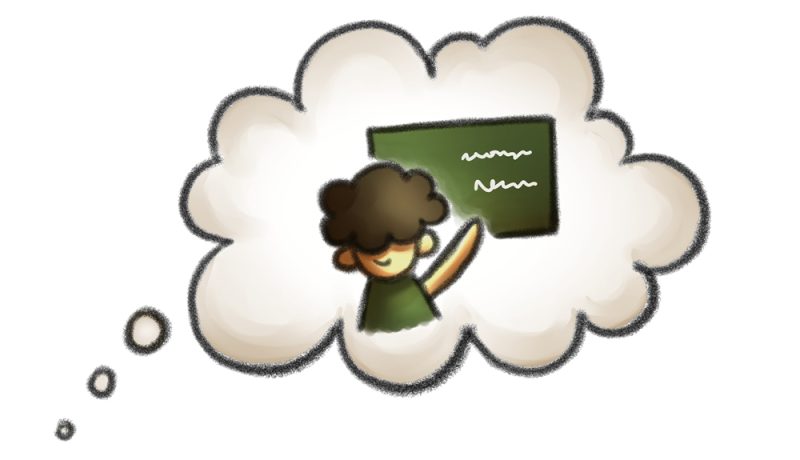
When Hernández was a child, he was in Villa Mitre’s club day and night. Throughout his childhood, he had curly hair which Hernández compares to that of Doctor J’s (Julius Erving’s). In an interview Hernández revealed that, when he was young, another child who was older than him had told him that he looked like a sheep, so Hernández got angry and started to chase him.
He gave some advice to the children watching the interview: “don’t ever get mad when they say something to you, like a nickname, because you’ll never get rid of it again. When Hernández became older, he got used to the nickname, there was even a time that, if someone called him ‘Sergio’ in the street, he wouldn’t even turn around.
Even though nowadays most people call him ‘Sergio’, he still remembers the nickname ‘Oveja’ with a lot of pride.
In the same interview, he recalled another anecdote about his nickname, “Oveja”, from when he took his first steps in coaching: “The nickname ‘Oveja’ became so big that when I was a coach at the Villa Mitre basketball school, when | was 18 years old, the mother of one of the kids came to talk to me and called me ‘Sergio.’ She couldn’t get used to calling me ‘Oveja’, then her son asked me: “Oveja, why do they call you ‘Sergio?”
Achievements
Sergio has won several titles/awards during his career:
Pro Clubs titles:
Six Argentine League Championships (2000, 2001, 2004, 2010, 2011, 2012)
South American League Championship (2001)
Three Argentine Cups (2003, 2004, 2010)
Top 4 Tournament (2004)
South American Club Championship (2004)
FIBA Americas League Championships (2008, 2010)
Argentina:
Panamerican Games (2007) → 4th place
FIBA Americas Championship (2007) →2nd place
FIBA Diamond Ball (2008) → Champion
Beijing Olympic Games (2008) → 3rd place
FIBA Americas Championship (2015) → 2nd place
Rio de Janeiro Olympic Games (2016) →8th place
FIBA Americas Championship (2017) → 2nd place
Panamerican Games (2019) → Champion
World Basketball Championship (2019) → 2nd place.
Activities
Match the vocabulary from the text with the definitions:
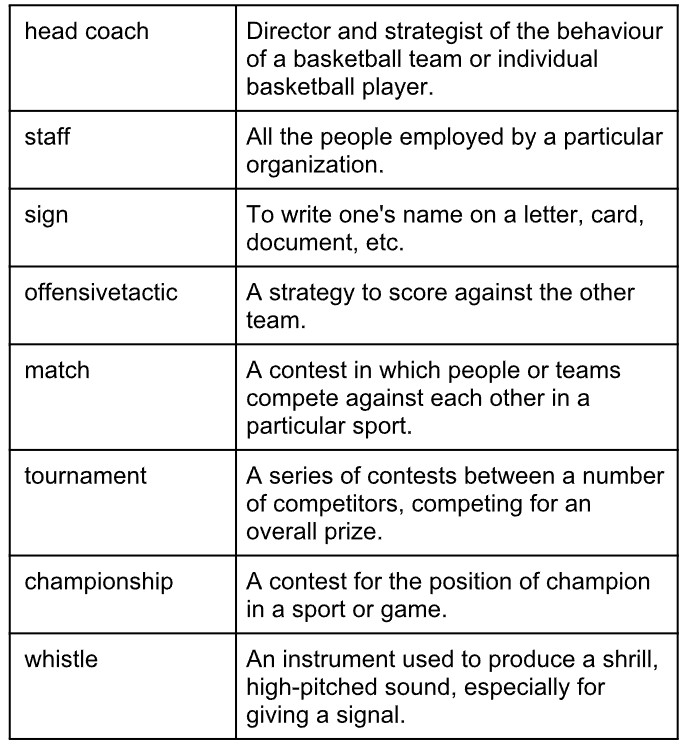
Fill in the gaps with the words in the box.
Every four years, athletes from all over the world compete in different (1) ______ representing their nation. The Olympic Games are the most important competition in which the best competitors can win the (2) ______ medal and be recognized as the best in the world of the current moment.
The first known Olympic Games began in 776 B.C at Olympia, Greece, where most people dedicated themselves to (3) _______ their gods. But it wasn’t until the last century that these games become a symbol that represented people from everywhere.
Pierre de Coubertin designed the Olympic Rings, which is the symbol for the Olympic Games, in 1913. The rings (4) _______ the union of the five continents and athletes from all the parts in the world meeting and competing at the Olympic Games.
Pierre invented this symbol with a white (5) ________ to represent the colours of the (6) _______ of every country in the world. They are five joined rings of the same size and from left to right the colours are displayed in this order: blue, yellow, black, green and red.
Original text:
Every four years athletes from all over the world compete in different disciplines representing their nation. The Olympic Games are the most important competition in which the best competitors can win the gold medal and be recognized as the best in the world of the current moment.
The first known Olympic Games began in 776 B.C at the Olympia, Greece where most people dedicated themselves to worship their gods. But it wasn’t until the last century that these games were given a symbol that represented people from everywhere.
Pierre de Coubertin designed the Olympic Rings which are the symbols for the Olympic Games, in 1913. The rings represent the union of the five continents and athletes from all the parts in the world meeting and competing at the Olympic Games.
Pierre invented this symbol with a white background to represent the colours of the flags of every country in the world. They are five joined rings of the same size and from left to right the colours are displayed in this order: blue, yellow, black, green and red.
True or false?
- The first known Olympic Games were in the USA __________
- Athletes from America and Europe compete in different disciplines representing their nations__________
- Pierre de Coubertin designed the Olympic Rings in 1913__________
- The Olympic Games is the most important competition all over the world__________
- There are 6 joined rings and the colours are displayed in this order: Blue, Yellow, Black Purple, Green and Red__________
What importance does the English language have in your life?
Bearing in mind the anecdote about Hernández’s relationship with the NBA: Why do you think it is important to learn English?
Imagine you are a sports journalist and you are going to interview Sergio Hernández. Design 5 questions you would like to ask.
BIBLIOGRAPHY:
Wikipedia Contributors. “Sergio Santos Hernández”. Wikipedia, The Free Encyclopedia. Wikipedia, The Free Encyclopedia 11 May 2022. Web. 1 Jun 2022.
“¿Quién es ‘El Oveja’? Perfil del nuevo entrenador de Casademont Zaragoza.”. Gigantes. 2 Nov 2020. Web. 1 Jun 2022.
https://www.gigantes.com/liga-endesa/sergio-hernandez-oveja/
Julián Mozo. “La Historia nunca contada: cuando Oveja Hernández casi llega a la NBA.” Página 12. 8 Jun 2020. Web. 1 Jun 2022.
https://www.pagina12.com.ar/270848-la-historia-nunca-contada-cuando-oveja-hernandez-casi-llega=
“Me siento en deuda con Villa Mitre”. Basquetplus. 26 Sep 2016. Web 1 Jun 2022.
https://www.basquetplus.com/articulo/me-siento-en-deuda-con-villa-mitre
“Sergio Hernández: “cuando era pibe, era villero a mucha honra.” 442 Perfil. 21 Oct 2022. Web. 1 Jun 2022.
https://442.perfil.com/noticias/amp/basquet/sergio-hernandez-cuando-era-pibe-era-villero-a-mucha-honra.phtml
“2015. Sergio Hernández, la era de la reflexión”. El Gráfico. 10 Sep 2019. Web. 1 Jun 2022.
https://elgrafico.com.ar/articulo/amp/1089/8280/2015-sergio-hernandez-la-era-de-la-reflexion
GuerAike. (26 Sep 2019). Luis Novaresio mano a mano con Sergio Hernández “El éxito es con uno mismo [Archivo de Vídeo].
Youtube. https://www.youtube.com/watch?v=7-FDwcKWqP4
deposoft. (14 Feb 2019). Manejo de equipos. El líder. Sergio Hernández. [Archivo de vídeo].
YouTube. https://youtu.be/CjE506DhEtM
Café por medio. (12 Jun 2014). Café por medio – 11 – Sergio “Oveja” Hernández. [Archivo de vídeo]
Youtube. https://youtu.be/a32LKDpRDcE
STORY 7 (C1+ level)
By Cathy Sole, Beth Lane, Finlay Porter and Cassandra Piejko
A Murder Mystery: Pehuen-có, 1833
Contents
- Introduction
- Activity Structure and Timing
- Rules
- Required Teaching Resources
- Character List
- Preliminary Round
- Round One: Introductions
- Round Two: Evidence
- Round Three: The Blaming Game
- Round Four: The Truth Comes Out
- Final Statement: What really happened
DISCLAIMER: THE FOLLOWING ACTIVITY CONTAINS USE OF RACIST AND SEXIST LANGUAGE, DETAILS OF MURDER, ADULTERY AND ADULT THEMES. TEACHERS ARE ENCOURAGED TO DRAW ATTENTION TO AREAS OF INAPPROPRIATE LANGUAGE AND EXPLAIN WHY IT IS INAPPROPRIATE.
(i) Introduction
This game is designed for eight groups of people, aged 13+. Suggested number of participants is 8 to 32.
(ii) Activity Structure and Timing
This activity should take between 90 and 120 minutes, depending on the level of English of the participants.
- The preliminary brief. Read out the newspaper article to your class and show them the house layout. Let them take notes and draw pictures if they’d like to.
- ROUND 1: split your participants into eight groups and give them each the brief about their character. Allow 10 to 15 minutes reading time. Then, give your participants 30 seconds to introduce themselves to the rest of the class, revealing as much or as little information as they like.
- ROUND 2: This is probably the longest round. Give your participants the clues regarding their characters and give them around 10 minutes to look over them.
- QUESTION TIME: Give the class 15 to 20 minutes question time, where they can go round to the different groups, ask questions about what evidence the other players have received, and take notes. If they are struggling to start the discussion, it can be helpful to write prompt questions on the board.
- ROUND 3: Give each group their respective statements to read through. One person from each group must read it aloud in front of everyone in the class! This should take around 15 minutes, then you should allow around 5 minutes for public questions where groups can raise their hands and ask specific questions to any of the suspects.
- ROUND 4: Give every group their final piece of information, which they must keep secret. Allow 5 to 10 minutes reading time.
- TIME TO GUESS: Every group must guess who they think is the murderer. Whoever is voted most as the murderer is ‘sent to jail.’ Write a list of the characters on the board, with their accusations.
- DEBRIEF: This final section should take no more than 5 minutes. Now the teacher should go through each suspect, declaring their innocence one by one. It is recommended to leave the last two suspects as Wanda and Tita, because Wanda is highly suspicious, and this will keep the tension high until the final reveal. Then read the final statement explaining all the details of the crime.
(iii) Rules
- Children are NOT allowed to lie about the information they receive and must answer all questions truthfully. However, they may withhold information, and only offer the information which is asked of them.
- Groups may not show each other their briefs – instead they must ask each other questions and relay the information verbally.
- After the question time is over, groups must return to their area.
- If they are asked a question for which the information does not provide an answer, they are free to make up a plausible response.
(iv) Required Teaching Resources
This Murder Mystery is a collaborative activity which will require few resources and can be adapted to various classroom settings. The following equipment is recommended:
- Printing:
- 8x introduction brief of the ‘Buenos Aires Gerald’
- 8x floorplan of the General’s house
- At least one copy of the four rounds of information on each character. These must be separated into their respective rounds, so that they can be distributed one after another at the correct time.
- Scissors to cut between the character briefs – each group should only receive the information about their character – if they want information about other characters, they need to use the discussion time to ask questions.
- It may be helpful to project the floorplan onto a wall or display it on a TV screen, if these facilities are available.
(v) Character List
- Ayün the Mapuche Woman
- Charles Darwin
- Doctor Medusa
- Guido the Gaucho
- María the Musician
- Miguel the Spanish Merchant
- Tita the Tango Dancer
- Wanda the General’s Wife
(vi) Preliminary Round
READ/HAND OUT THE FOLLOWING NEWSPAPER ARTICLE AND HOUSE LAYOUT:
Buenos Aires Gerald
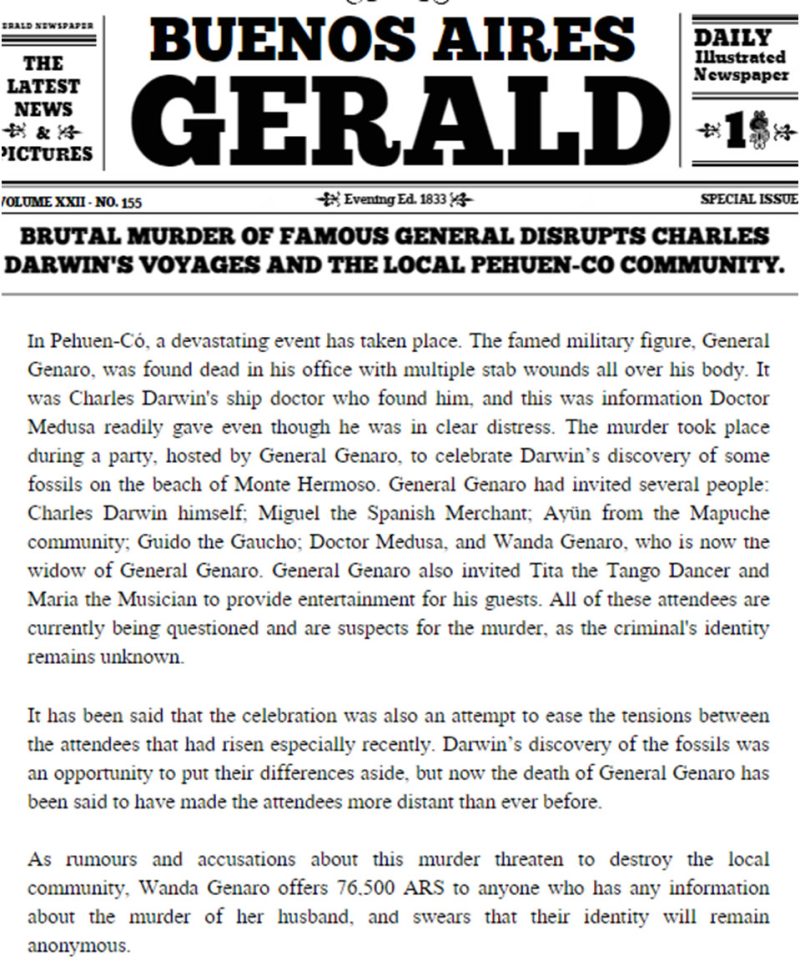
Floor Plan

(vii) Round One: Introductions
Split your class into eight groups and assign them each a character. Let them read this information about their character, then give each group 30 seconds to introduce themselves, revealing as much or as little information as they like.
YOUR NAME IS GUIDO THE GAUCHO
You were invited to the party to dance tango with Tita Tango, your wife. You immediately accepted, because you were one of the General’s closest friends, much to the General’s wife’s dismay. You were also paid a lot to dance for him, and you were excited to spend some quality time with Tita. The two of you have been drifting apart lately, so you were hoping that this party might patch up some of the holes in your relationship…
YOUR NAME IS DOCTOR MEDUSA
You came to Pehuen-Có on the HMS Beagle with Charles Darwin. However, you didn’t make it to Monte Hermoso. Instead, you were asked to look after General Genaro, who has been sick with gout for the last three weeks, because you are the best doctor around these parts. Over the last three weeks, you have become accustomed to the General’s bad moods, and disagree with the terrible way he treats his servants. He invited you to the party so that you’d be close by in case the General was feeling unwell. You were the first person to find the General, but unfortunately it was too late to save him…
YOUR NAME IS MARÍA THE MUSICIAN
You are a thirty-year-old woman struggling economically and looking to make ends meet. You were called to the party to perform and entertain the guests. However, tensions are high between you and the General as he is refusing to pay what you deserve for your time due to him knowing a secret or two about you and how you make your money. You hope to get equal with him by the end of the night, whatever it may take…
YOUR NAME IS MIGUEL THE MERCHANT
You are best friends with General Genaro, however your friendship has become a bit distant recently, and his wife, Wanda, was the first one to keenly invite you to the party. You look forward to coming to the party to discuss your colonialist plans with General Genaro, but you feel as though there are one or two things that could put a strain on your friendship that aren’t just to do with politics…
YOUR NAME IS TITA THE TANGO DANCER
You are 22 years old and have been invited to General Genaro’s celebration of Darwin’s discovery to provide entertainment through your tango dancing. You pride yourself in being the wife of Guido the Gaucho, who is also attending this party to be your main dance partner; however, you have found yourself being ignored and neglected by Guido as he spends his time elsewhere. You are not sure where he goes or who he goes out with – it just seems like you do not have his attention anymore. You try not to show this though, and so you focus on your passion: tango dancing. Although you are quite reserved at first, through dancing, another person inside you comes alive – a person who really lets her emotions run free…
YOUR NAME IS WANDA GENARO, GENERAL GENARO’S WIFE
You are 25 years old, and the wife of the murdered General Genaro. You were obviously attending the celebration as your husband was the host and you were the person who put the most effort into organising it. Spending time with your husband was the last thing on your mind though… No one else knew what happened in private and what General Genaro was really like, so you were left to suffer with these secrets alone. You are a strong, powerful woman who often helps General Genaro make decisions on his conquests. You don’t want to leave your husband because you still care for him (and his power). To keep yourself entertained and to distract yourself from your husband, you invited Miguel the Spanish Merchant, someone who has always been there when you needed him…
YOUR NAME IS AYÜN
You are 36 years old. You are a member of the local Mapuche community. You wear a handmade küpam, the traditional clothes of the Mapuche people. Your people have been suffering persecution at the hands of the colonialists. Your people face discrimination, racism, and are forced to surrender their lands to the settlers. You are angry that your land is being stolen by the settlers, but you are peaceful by nature, and hope to educate the criollo and the immigrants who have come to your lands about the lifestyle and culture of the Mapuche. You don’t like the general, as you know he is responsible for the deaths of many of your people, but you don’t support the malones either, because you believe that violence is not the answer to this problem. You were invited by Darwin to the celebration party because he was curious to meet some of the indigenous people of the area. You agreed to come in the hope that you can speak to some of the notable people in the community and persuade them to learn about the lives of the natives and sympathise with them.
YOUR NAME IS CHARLES DARWIN
You are a young British academic and naturalist, who has come on a voyage of exploration to gather specimens and study flora and fauna from around the world. During your time in Argentina, you found several fossils of extinct animals which have left you with many unanswered questions. Among some of your findings are the bones, skulls, and armour plates of species which you assume must be rhinoceroses, mastodons and giant armadillos.
To celebrate this discovery, you organised a party at the General’s house, and invited some important people from the local area. You are curious about the way of life in this frontier settlement and have many questions to ask everyone. You are particularly curious about the Gaucho and the Mapuche woman, as their way of life is very different to yours. You don’t approve of the violent methods of the general and think that the colonists have been too brutal in their attacks on the native people. However, you also think the indigenous people are uncivilised, and don’t trust the locals.
TEACHER’S NOTE: As the only historical figure in the murder mystery, it might be worth asking the children what they know about Darwin. What is he famous for? And why is he still relevant today?
(viii) Round Two: Evidence
For GUIDO the GAUCHO:
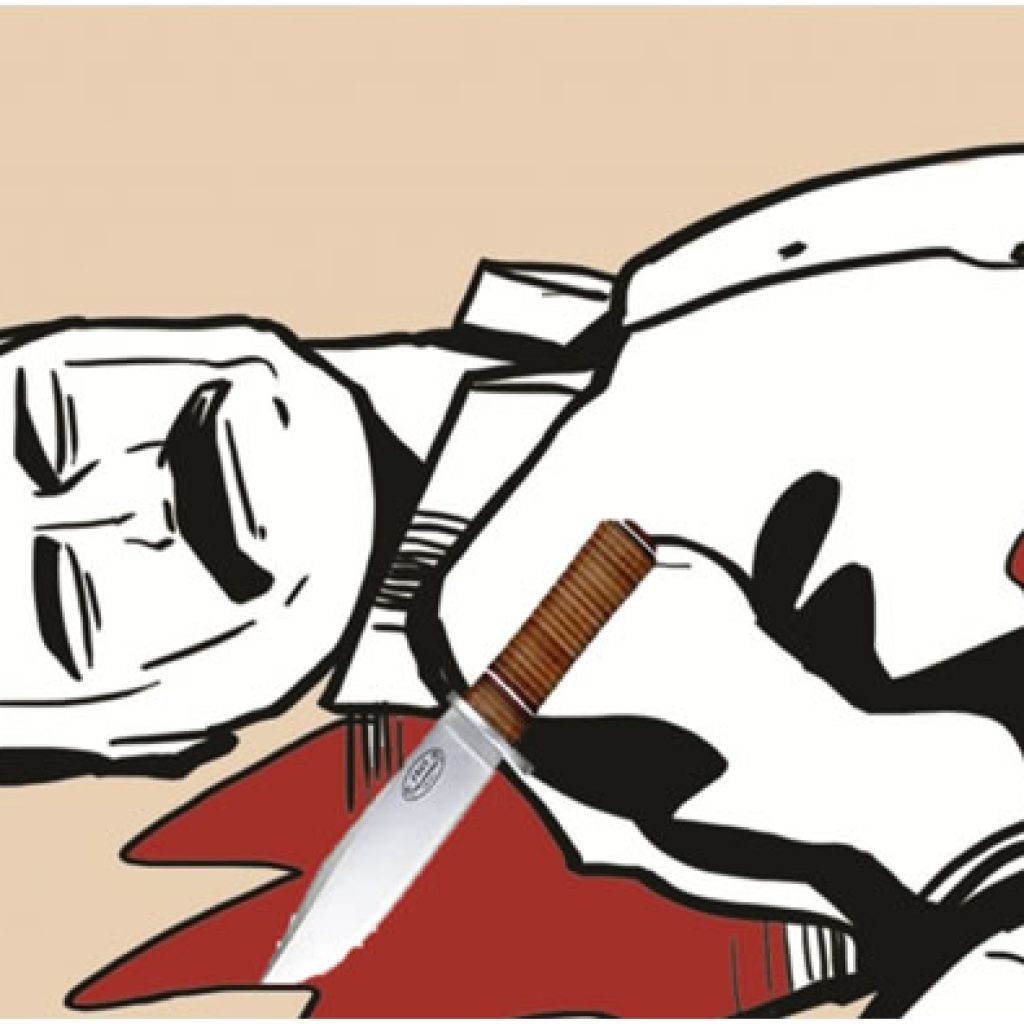
The Gaucho’s knife was found next to the General – it was the murder weapon!
For DOCTOR MEDUSA:
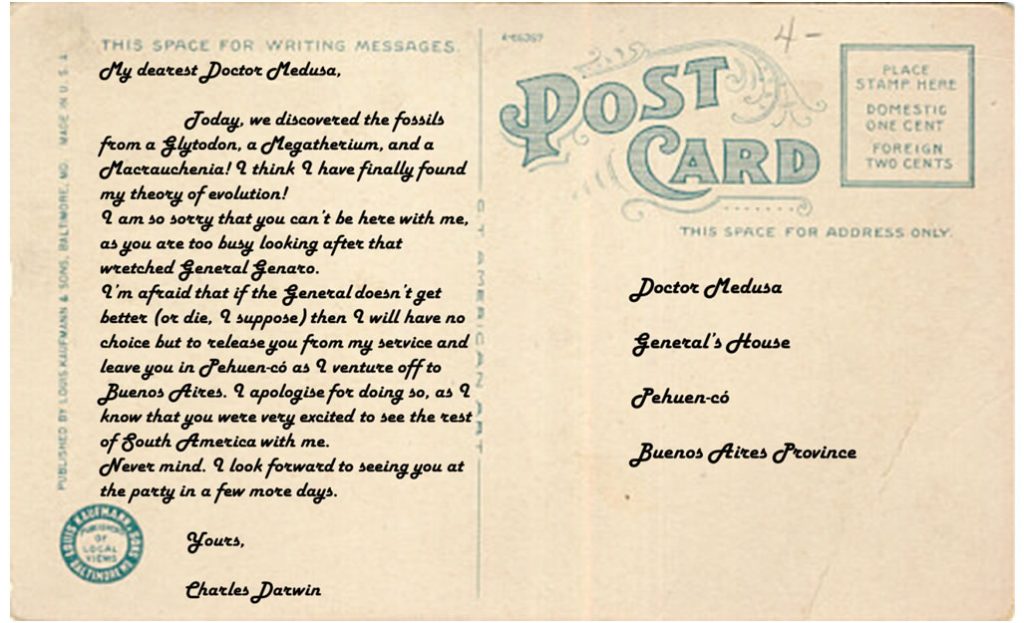
A postcard from Charles Darwin to Doctor Medusa
For MARÍA the MUSICIAN:
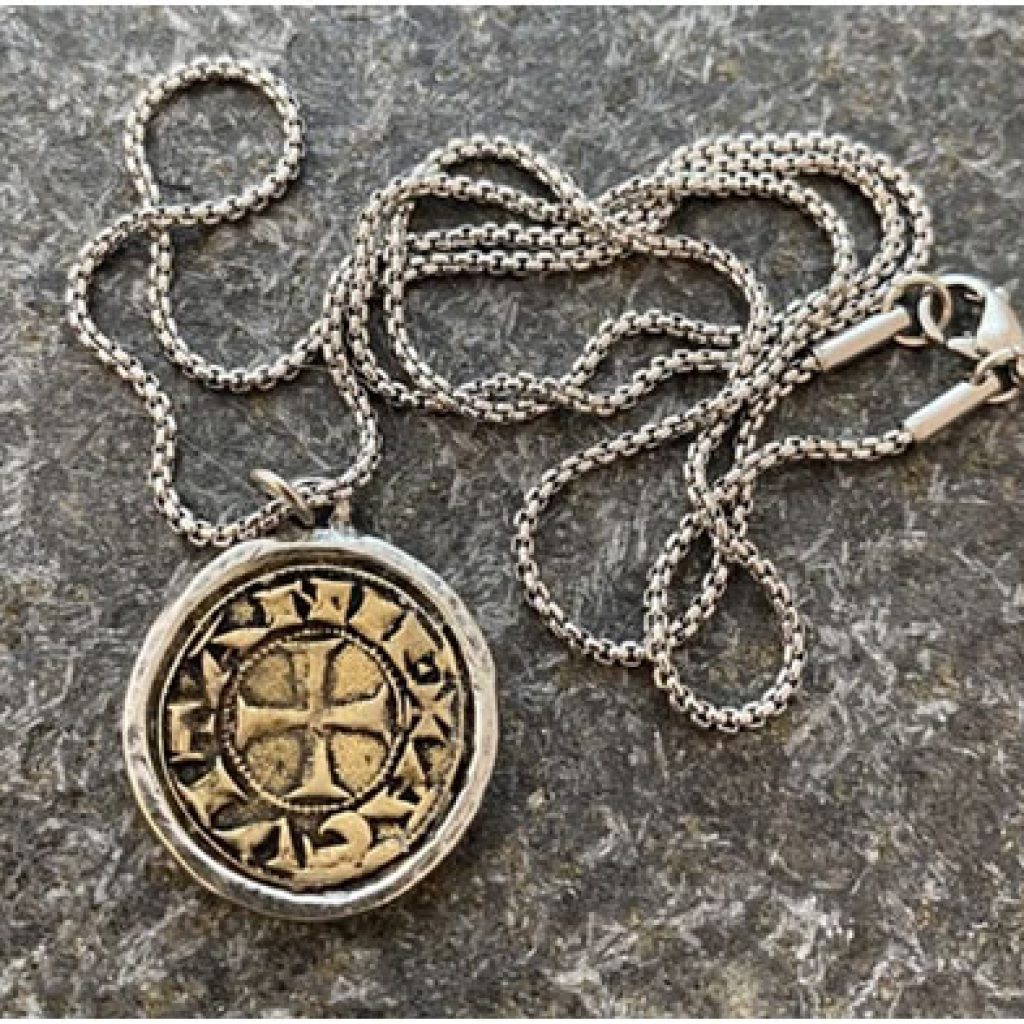
The General’s necklace, wich he was wearing at the party, was found in your handbag after his death.
For MIGUEL the MERCHANT:
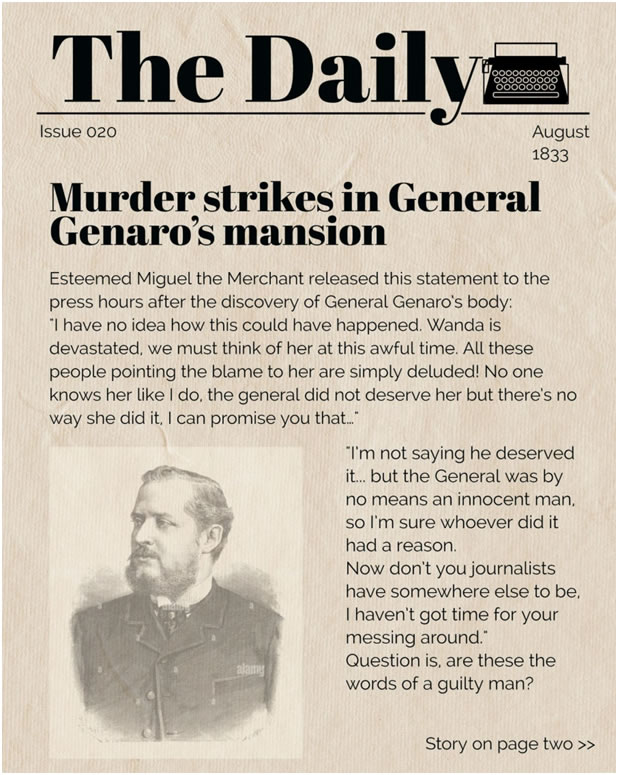
For TITA the TANGO DANCER:
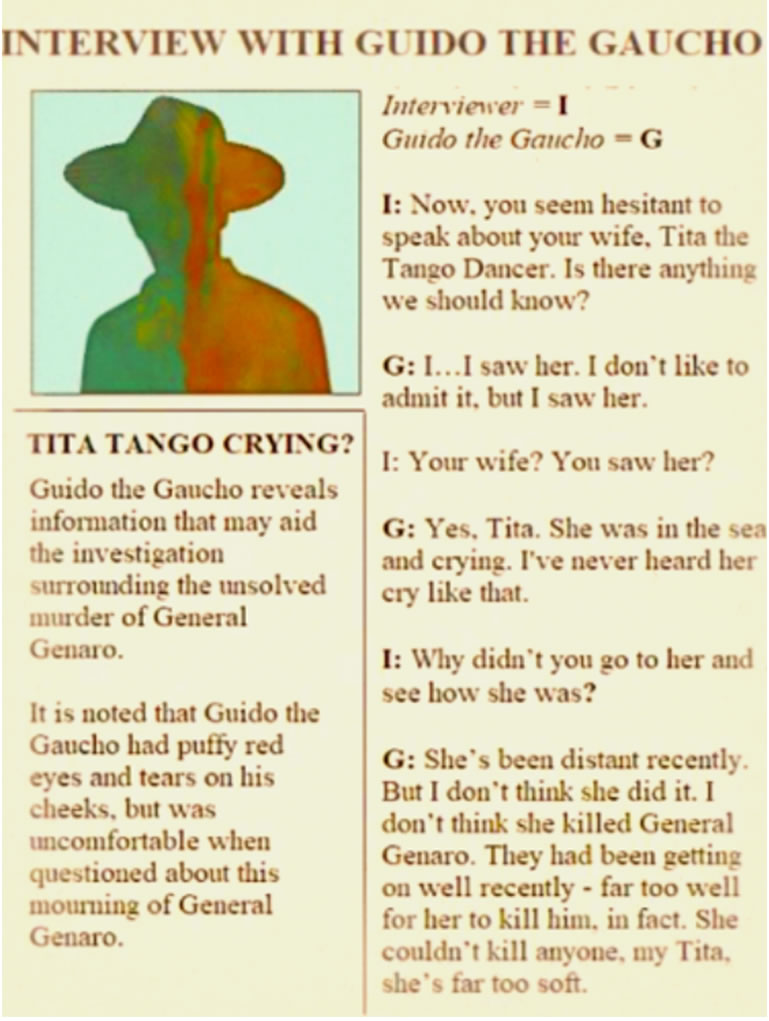
For WANDA the WIFE:
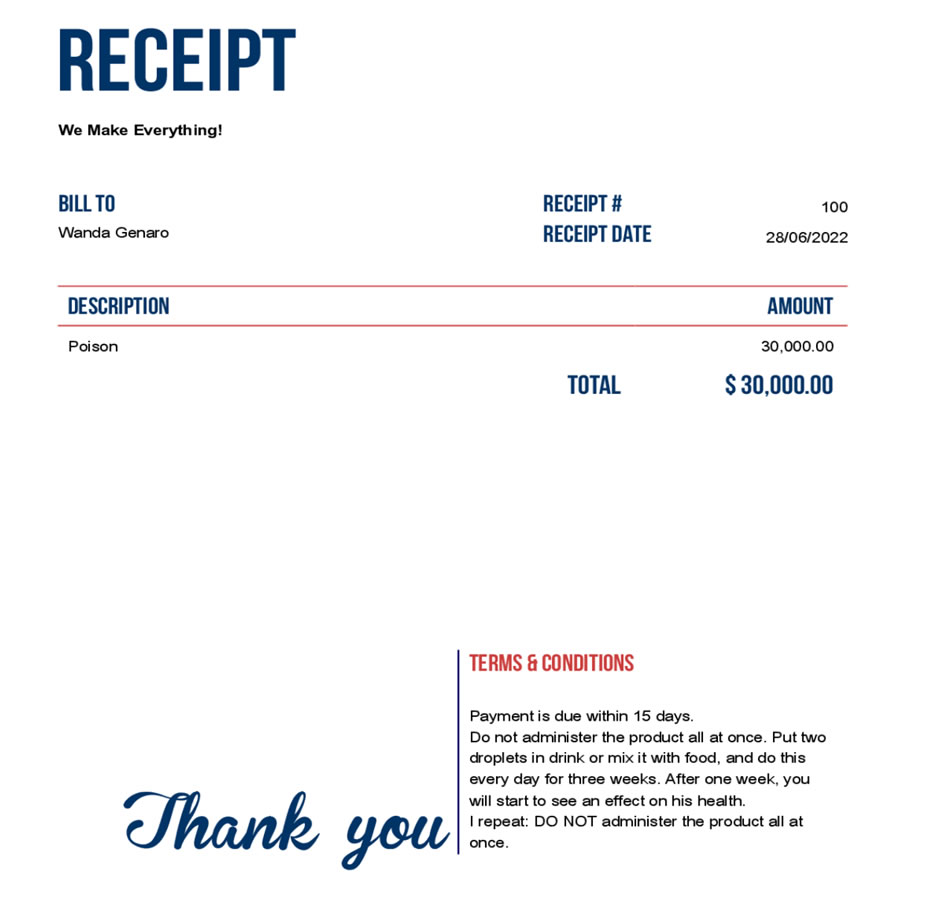
For AYÜN the MAPUCHE:
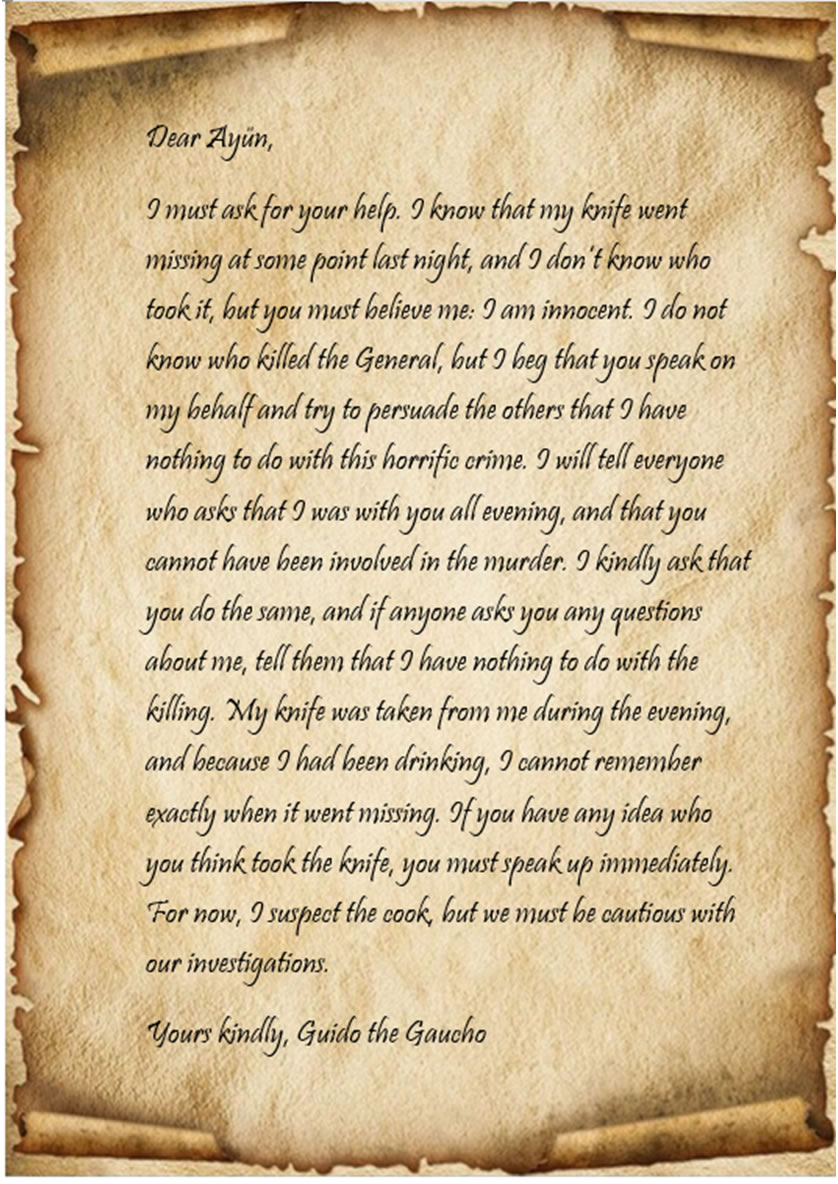
A letter from Guido the Gaucho to Ayün
For CHARLES DARWIN:
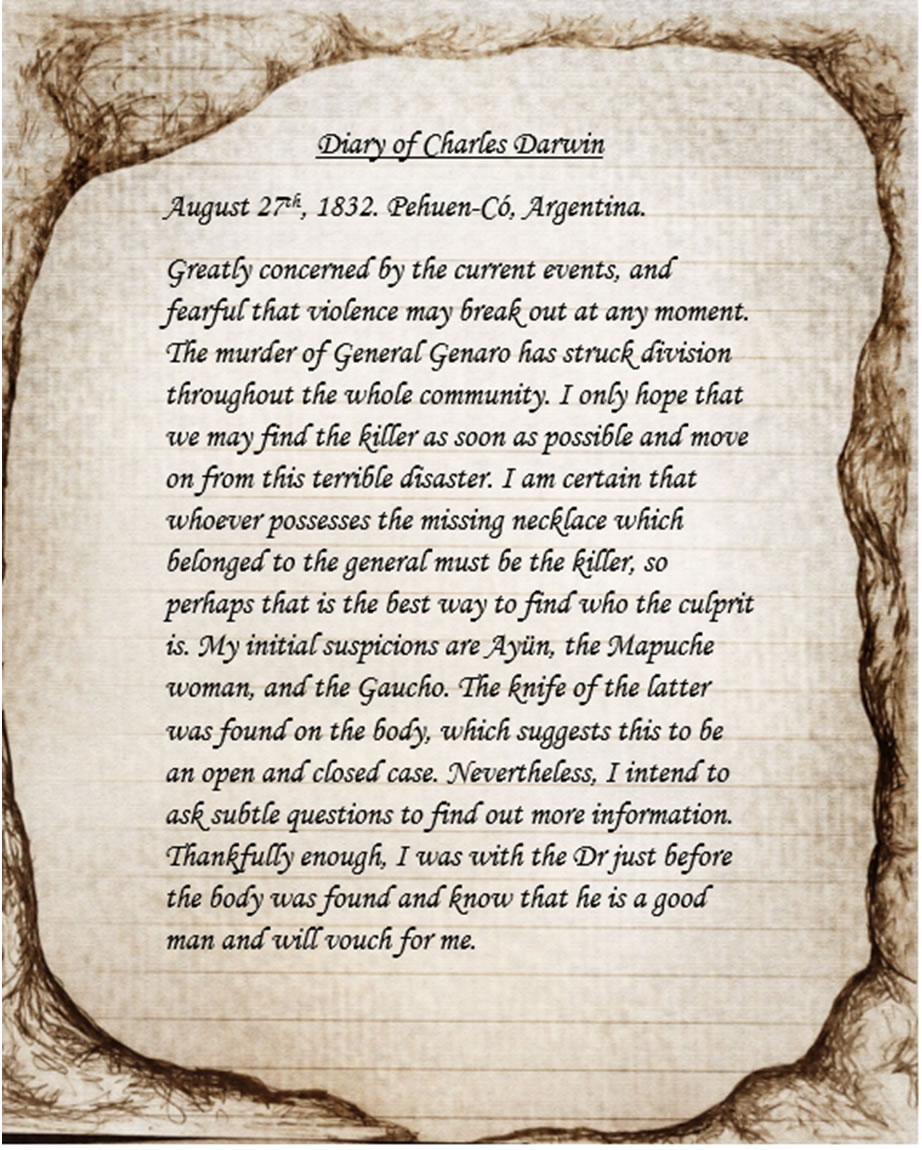
QUESTION TIME – Give the class 15 minutes of question time, where they can go round to the different groups, ask questions about what evidence the other players have received, and take notes, before Round Three begins.
(ix) Round Three: The Blaming Game
The characters read out their alibis in front of the whole party. Give each character their information and ask them to read it out to the whole group.
TEACHER’S NOTE: Feel free to play around with the order, or let the children decide who goes first themselves. But it is recommended to let Guido read last, as this leaves emphasis on the suspicion of Wanda, and distracts a little from the real murderer.
MARÍA the MUSICIAN:
“I was playing the piano in the lobby, and so I was right outside the General’s office. I didn’t hear the General being murdered, so I suspect that it was the doctor. He is, after all, a medical professional who knows how to get the job done quickly and quietly. I think he used the Gaucho’s knife to try and frame him, then alerted us to the body to try and clear himself of suspicion! Besides, ever since that doctor has been treating the general for his gout, the general’s health has been getting worse and worse rather than better. He may just be a bad doctor but I thought the English were supposedly advanced in medicine…surely this deserves some investigation….right?”
MIGUEL the MERCHANT:
“I was with Wanda all night discussing the general’s recent behaviour, it was all harmless, just normal marital issues, nothing to worry about at all.
For me it’s obvious who the murderer is. It’s Ayün. It’s always the quiet ones. They’re jealous people those natives. They just can’t help it. It wouldn’t surprise me if she went for me next. You know what women are like, can’t control themselves and their hormones. It’s no wonder she’s acted out, I don’t even know how she got the invite here in the first place. Get her gone, the sooner we get rid of her, the better this place will be.”
TEACHING NOTE: At this point, it is recommended to ask the children to consider if this is appropriate language to use – and why not?
TITA the TANGO DANCER:
“Why would I kill General Genaro? Everyone has seen us getting along well recently, have they not? I wouldn’t cut off the money he gives me for dancing for him – never. Besides, I was in the garden, dancing alone, that night. Guido saw me, you all can ask him. He loves to watch me dance.
Oh Guido, I’m sorry, my love. I love you so much that it hurts my heart, but I have to tell everyone. I wasn’t going to, but this is getting out of hand; I can’t keep it to myself any longer. I think Guido murdered the General. The necklace that María found wasn’t the General’s. It… It was Guido’s. It’s a family heirloom – one of the most valuable items Guido owns. One night, after dancing with Guido for the General, I overheard the General tell Guido how much he adored the necklace. I know my husband very well, you see, and so I knew the comment made Guido uncomfortable.
I don’t want to speak ill of the dead, but everyone here knows that Guido and the General despised each other for years. The General takes and takes from Guido’s people – the gauchos – and so he most likely took his family’s heirloom too. Whenever Guido came back from visiting the General, he was always quiet, flushed in the face from anger, and sometimes his appearance was messy. It was like they fought a lot… I think the General’s theft of his heirloom was what made Guido kill him. After all, his knife was found next to the General’s body!”
WANDA the WIFE:
“This is absolutely ridiculous. Why would I kill my husband, for goodness’ sake? He has given me whatever I desire whenever I ask for it… I would never kill him. Besides, I was with Miguel the Merchant all night, so it would have been impossible for me to kill him. We were having a lively discussion about my husband, in fact, and his achievements. It was so lively that we stayed with each other talking about it until we were told that a body had been found, so I could not have killed my husband.
However, I know who did it: it was Tita the Tango Dancer. That wench has been staying far too close to my husband recently, and everyone has taken notice, even the gaucho. She has been trying to seduce him, I know it. I know who my husband is – yes, I use ‘is’ because he is still alive in my heart – very appealing to anyone because of his wealth, power, great looks. She killed him! She killed my love! I do feel for the gaucho though, bless his little heart. His own wife used his knife to kill my husband, ha. Who else could get that close to the gaucho to take his knife? Of course, it could have been the gaucho himself, but no. He has no reason to kill my husband. But Titadefinitely does. My husband most likely rejected her vile advances and, in a fit of rage, she killed him. It’s as simple as that. Murder solved.”
AYÜN:
“I wish to clear my name of any suspicion you may hold. I can not only assure you of my innocence, but I can also vouch for my friend Guido’s innocence. Late last night, I was talking to Guido as he was greatly distressed. He was telling me of his recent argument with Tita, but refused to go into detail, except to say that she had been very upset lately. While we were talking, Guido noticed his knife had gone missing, and we began to search for it together. We continued searching until it was brought to our attention that the body had been found. I hope the honesty in my words is enough to convince you of my innocence. I would not like to accuse anyone, but to simply offer some information which may be of use to you all.
Early last night, Mr. Darwin approached me to ask for my services. He explained that he had been trying to organise an expedition deeper into native territory, into the lands of my people. He was complaining that the general was the only one standing in the way of him taking his fossil studies further south beyond the frontier. I politely declined, but I could tell he was angry, and left me cursing the general and his stubbornness. I will let you do whatever you will with this information, but I ask you once again to remember my innocence.”
CHARLES DARWIN:
“Ladies and Gentlemen, I hope in brief, to clear my name, and assist you in your investigations. I can count on Dr Medusa to vouch for me: he was with me discussing my notes on the fossils we had found, as I had suddenly been struck with an idea and needed to document it immediately. He accompanied me to the study, shortly before he stepped out and found the body. He, like me, has been raised to uphold European values. I am but an English gentleman, and as such am incapable of committing such a barbaric murder.
However, I have some crucial information which I am sure will help us all solve this crime. Earlier in the night, before I entered the study in search of my notebook, I was talking with Miguel. The man was a little drunk, having been using a little too much of the wine all evening. Such was his state when he let slip a rather incriminating secret to me. Miguel has been having an affair with Wanda! This is clear evidence to suggest that he is the killer! Crimes such as these are too often brought about by the passions of love! I beg you, dear guests, think upon these words I have spoken, and form your own conclusions.”
DOCTOR MEDUSA:
“I must confess, finding the body does not bode well for me. But I must ask you: why on earth would I confess to finding the body if I was the murderer, when it makes me look so guilty? And as a doctor, would you not expect me to commit a cleaner murder? I have spent five years in the medical profession. Do you not think that, if I were to commit a murder, I would do so with my own equipment? Using a method with no blood or gore?
I am a doctor. I save lives, not take them. Darwin can vouch for me here. He knows I have done nothing but work peacefully throughout my entire time at sea. Up until I found the body, he and I were in the study together, looking at fossils. While perusing the general’s fossils, I suddenly heard the piano stop playing. I was curious, but I assumed that María had simply taken a break. However, when the music started playing again, around ten minutes later, I was feeling tired of looking at fossils, so I went for a walk around.
That’s when I found the general, dead, in his office. I called for help, and María came running in, screaming in anguish. The general’s necklace was later found in her handbag. It is clear to me that she stopped playing the music to go and kill the general, then foolishly went back to her instrument, hoping nobody would notice this interlude. Additionally, I have a strong suspicion that poison was also being used against the general, as he was showing many symptoms of low-dosage arsenic poisoning. Perhaps María was slowly wearing the general down so that she could kill him easier.”
GUIDO the GAUCHO:
“I’m devastated that our brave and noble general has been killed. I don’t even know what to say. Anyone who knows me knows that I had nothing but respect for General Genaro. Additionally, after dancing with Tita for the general’s entertainment, I spent the rest of the evening discussing the war and its effect on our communities with Ayün, watching Tita dancing by herself in the garden. Therefore, I know that my knife was clearly planted next to the general’s dead body by an enemy of mine.
I have always respected the general’s wife. But I now have a feeling that this respect is not mutual. There have been several occasions in which Wanda has been disrespectful towards myself and my community. I remember one occasion in particular, in which I turned up on one of my regular visits to the general’s house, wearing my horse riding boots. I’ll admit, I did bring some mud onto the carpet on my way to the general’s office, but the way Wanda reacted – calling me dirty as if I was scum – was out of order.
Wanda strikes me as a very proud woman. And we must remember that, if the general were to die, Wanda would inherit all of his power and money. And by using me as a scapegoat, she has also advanced one step closer to eradicating the gaucho community. Need I say anything else to convince you?”
(x) Round Four: The Truth Comes Out
For DOCTOR MEDUSA:
You are innocent. It is true that the general had been getting more and more sick since you had been looking after him, but this had nothing to do with you, and is in fact due to someone else poisoning him slowly.
Even though you resented the general, as he was rude to you and stopped you from going on your expeditions, you would never commit murder; it is against your nature.
On the night of the party, you really were with Darwin, talking about fossils and hearing him plan out the rest of his expedition.
For MARÍA the MUSICIAN:
It is true you took the General’s necklace;however you did not actually commit the murder. After hearing a scream coming from the office, you went to investigate, and found General Genaro dead on the floor. You had two decisions to make, call for help, or seize an opportunity to get rid of your debts. You chose the latter and took the General’s necklace off him before leaving the room, moments before the doctor discovered his body, believing he was the first at the murder scene.
You are in the clear, however there is still a killer among us. Take your guessand choose wisely.
For MIGUEL the MERCHANT:
You are Miguel, and as flawed as you are, you are not the killer. Although your feelings towards the general are far from positive after hearing Wanda’s many complaints, the affair you were having with his wife these past six months has rendered you soft, distracted, and in a love bubble, only focused on your infatuation for Wanda.
Don’t relax too much though, there is a killer on the loose. Take your pick, who actually did it?
For WANDA:
Wanda, you are not the murderer, but you are not innocent either. You did not stab your husband, General Genaro, but you had been putting poison in his food and drink over time. You were shocked to see that someone else had killed him before your poison could truly take effect, but also relieved because it meant you were unlikely to be found out. Killing your husband meant that you would inherit all that he has, and you would be able to love Miguel the Merchant publicly. Yes, you have been having an affair with Miguel the Merchant, but that only began when you knew that the General was having an affair himself. You didn’t know who with, though you suspected Tita, but it was obvious that the General did not love you anymore. So, why should you love him? Instead, you decided to take all that he has and start a new life with Miguel instead.
Now, you have to make sure no one finds out that you were poisoning the General. After all, that meant the perfect life with Miguel you were dreaming of would be ruined. So, your job is to find out who stabbed him, and put all of the blame entirely on them. Good luck.
For AYÜN:
Ayün, you are not the murderer. Although you are not a fan of the general and the way he has been persecuting the Mapuche people, you are not violent and hope to resolve the conflict peacefully. Guido the Gaucho can confirm that you were helping him to find his knife at the time of the murder, so it should be easy to convince the others that you weren’t the killer. But there is more to Guido than meets the eye, see if you can ask some prying questions about his relationship to the general. And why was Tita angry at him on the night of the murder? There are still mysteries to be unravelled, and there is still a killer on the loose! Look over the information you have learned and ask around to find the real criminal. (Or is it ‘criminals’?)
For CHARLES DARWIN:
Charles Darwin, you are not the murderer. You were angry at the general for not allowing you to continue your fossil-hunting further south into native territory, but you were not driven to violence. You are devoted to natural sciences, and feel that you are on the verge of an incredible breakthrough. You are far more concerned with your fossils than with any local politics within the Bahia Blanca community. Although your alibi is weak, placing you alone in the study at the time of the crime, you can count on Dr Medusa to prove your innocence.
Now, all you want is to wrap up this case as soon as possible and continue with your studies. The killer is still on the loose! Look over the notes you have made, who could it be?
For GUIDO THE GAUCHO:
You really were innocent. At least, in terms of murdering the general. On the night of the murder, you were dancing with Tita for the general’s entertainment. But you weren’t looking at Tita. You were looking at Genaro.
You and Genero have been having an affair for the past year, and you are in love with him. So much so, that he gave you the keys to his house, and you gave him your necklace. You feel terrible because you lost the keys to his house, and you feel like you should mention it, only you’re not sure how it’s connected to this murder.
It’s true that you were speaking to Ayün the entire night of the party, and that you saw Tita dancing outside. If only you could figure out who had stolen your knife. Then you’d find your true love’s killer…
TEACHER’S NOTE: If it becomes clear to the group that there was a homosexual affair between the General and the Gaucho, this would be an excellent time to ask pointed questions about LGBT+ relationships. How was homosexuality viewed in 1833? How has that changed today? Do the children know which countries have legalised same-sex marriage, and when?
For TITA TANGO:
You are Tita, and you are the murderer. When dancing with your love, Guido the Gaucho, you took his knife without him knowing and used it to stab the General to death. Why did you do it? You found out that Guido was having an affair with the General. After seeing that Guido gifted the General the family heirloom, that he spent all night with the General, that he became jealous whenever you were close with the General… It made you suspicious, so you investigated, and saw through the gap of a door that they were having an affair.
But what is interesting is the fact that the General did not fight back – it seemed that he could not fight back, even though he was a strong military figure. You made the final blow and was the one who killed the General, but who made him that weak? Was there someone else who wanted the General dead? And can you find out who to take the blame off of you?
NOW IT IS TIME FOR EVERYONE TO MAKE THEIR GUESSES. IT IS VITAL THAT THE MURDERER MUST NOT GUESS THEMSELVES.
WHOEVER ENDS UP WITH THE MOST VOTES WILL BE SENT TO JAIL!
(xi) Final Statement: What Really Happened?
TEACHER’S NOTE: Once each group has made their accusations, you may read out the final statement which reveals all the details of the murder mystery.
Tita stole the Gaucho’s knife while they were dancing for the general. She had just found out that her husband was having an affair with the General and was devastated. One of the clues to her husband’s secret affair was a set of keys to the General’s house she found on Guido. Another, was that the General had recently been wearing a necklace that she knew was precious to her beloved Guido.
Despite Wanda’s attempts to take matters into her own hands, poisoning the General over the past month, it was Tita that ultimately put the final nail in the coffin. The night of the party, Tita snuck into the General’s office and killed him with Guido’s knife. She left his knife by the General’s side to incriminate her cheating husband. Tita then left the General’s office through the French patio doors, and so her alibi about dancing in the garden was, in fact, true.x
STORY 8 (B1+ level)
By Cathy Sole, Beth Lane, Finlay Porter and Cassandra Piejko
A Murder Mystery: Pehuen-có, 1833
- Contents
- Introduction
- Activity Structure and Timing
- Rules
- Required Teaching Resources
- Character List
- Preliminary Round
- Round One: Introductions
- Round Two: Evidence
- Round Three: The Blaming Game
- Round Four: The Truth Comes Out
- Final Statement: What really happened
DISCLAIMER: THE FOLLOWING ACTIVITY CONTAINS USE OF RACIST AND SEXIST LANGUAGE, DETAILS OF MURDER, ADULTERY AND ADULT THEMES. TEACHERS ARE ENCOURAGED TO DRAW ATTENTION TO AREAS OF INAPPROPRIATE LANGUAGE AND EXPLAIN WHY IT IS INAPPROPRIATE.
(i) Introduction
This game is designed for eight groups of people, aged 13+. Suggested number of participants is 8 to 32.
(ii) Activity Structure and Timing
This activity should take between 90 and 120 minutes, depending on the level of English of the participants.
- The preliminary brief. Read out the newspaper article to your class and show them the house layout. Let them take notes and draw pictures if they’d like to.
- ROUND 1: split your participants into eight groups and give them each the brief about their character. Allow 10 to 15minutes reading time. Then, give your participants 30 seconds to introduce themselves to the rest of the class, revealing as much or as little information as they like.
- ROUND 2: This is probably the longest round. Give your participants the clues regarding their characters and give them around 10minutes to look over them.
- QUESTION TIME: Give the class 15 to 20minutes question time, where they can go round to the different groups, ask questions about what evidence the other players have received, and take notes. If they are struggling to start the discussion, it can be helpful to write prompt questions on the board.
- ROUND 3: Give each group their respective statements to read through. One person from each group must read it aloud in front of everyone in the class! This should take around 15minutes, then you should allow around 5minutes for public questions where groups can raise their hands and ask specific questions to any of the suspects.
- ROUND 4: Give every group their final piece of information, which they must keep secret. Allow 5 to 10minutes reading time.
- TIME TO GUESS: Every group must guess who they think is the murderer. Whoever is voted most as the murderer is ‘sent to jail.’ Write a list of the characters on the board, with their accusations.
- DEBRIEF: This final section should take no more than 5minutes. Now the teacher should go through each suspect, declaring their innocence one by one. It is recommended to leave the last two suspects as Wanda and Tita, because Wanda is highly suspicious, and this will keep the tension high until the final reveal. Then read the final statement explaining all the details of the crime.
(iii) Rules
- Children are NOT allowed to lie about the information they receive and must answer all questions truthfully. However, they may withhold information, and only offer the information which is asked of them.
- Groups may not show each other their briefs – instead they must ask each other questions and relay the information verbally.
- After the question time is over, groups must return to their area.
- If they are asked a question for which the information does not provide an answer, they are free to make up a plausible response.
(iv) Required Teaching Resources
This Murder Mystery is a collaborative activity which will require few resources and can be adapted to various classroom settings. The following equipment is recommended:
- Printing:
- 8x introduction brief of the ‘Buenos Aires Gerald’
- 8x floorplan of the General’s house
- At least one copy of the four rounds of information on each character. These must be separated into their respective rounds, so that they can be distributed one after another at the correct time.
- Scissors to cut between the character briefs – each group should only receive the information about their character – if they want information about other characters, they need to use the discussion time to ask questions.
- It may be helpful to project the floorplan onto a wall or display it on a TV screen, if these facilities are available.
(v) Character List
- Ayün the Mapuche Woman
- Charles Darwin
- Doctor Medusa
- Guido the Gaucho
- María the Musician
- Miguel the Spanish Merchant
- Tita the Tango Dancer
- Wanda the General’s Wife
(vi) Preliminary Round
READ/HAND OUT THE FOLLOWING NEWSPAPER ARTICLE AND HOUSE LAYOUT:
Buenos Aires Gerald
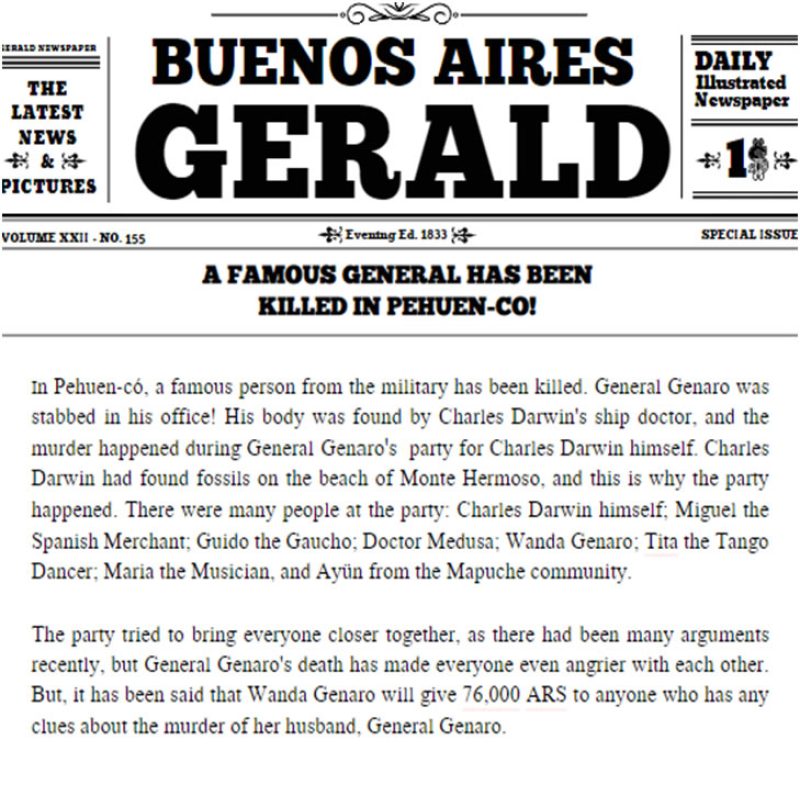
Floor Plan
(vii) Round One: Introductions
Split your class into eight groups and assign them each a character. Let them read this information about their character, then give each group 30 seconds to introduce themselves, revealing as much or as little information as they like.
YOUR NAME IS GUIDO THE GAUCHO
You were invited to the party to dance tango with Tita Tango, your wife. You are the General’s best friend, but sadly the General’s wife doesn’t like you. Your marriage is struggling, so you hoped the party might bring you closer to your wife, Tita. You were excited to see the General, too.
YOUR NAME IS DOCTOR MEDUSA
You are one of the best doctors in the world, and you came to Pehuen-Có on the HMS Beagle with your friend Charles Darwin. However, you had to stop travelling with Darwin because you were asked to look after General Genaro, who has been sick for three weeks. You don’t like the general because he is rude and mean. You were the first person to find the General’s body, but it was too late to save him…
YOUR NAME IS MARÍA THE MUSICIAN
You are a thirty-year-old woman struggling economically and looking to make ends meet. You were called to the party to perform and entertain the guests. However, tensions are high between you and the General as he is refusing to pay what you deserve for your time due to him knowing a secret or two about you and the lengths you go to to make your money. You hope to get equal with him by the end of the night, whatever it may take.
YOUR NAME IS MIGUEL THE MERCHANT
You are best friends with General Genaro, however your friendship has become a bit distant recently, and his wife, Wanda, was the first one to keenly invite you to the party. You look forward to coming to the party to discuss your colonialist plans with General Genaro, but you feel as though there are one or two things that could put a strain on your friendship that aren’t just to do with politics…
YOUR NAME IS TITA THE TANGO DANCER
You are a 22-year-old tango dancer at General Genaro’s party. Your husband, Guido the Gaucho, is at the party too, but Guido has been ignoring you recently. You are not sure why Guido is ignoring you, but it makes you sad. Tango dancing helps make you feel happy again.
YOUR NAME IS WANDA GENARO, GENERAL GENARO’S WIFE
You are a strong 25-year-old woman and you were at General Genaro’s party as he is your husband. General Generao was not a nice person in private and was different in front of other people. You don’t leave him because you care for him and he still has power. To help stop you from being too unhappy, Miguel the Spanish Merchant agrees to go to the party with you.
YOUR NAME IS AYÜN
You are a 36-year-old woman of the Mapuche community. You wear a küpam, the traditional clothes of the Mapuche people. Your people have been suffering from the invasion of the colonialists. There is a lot of discrimination, racism, and the colonialists have been stealing your land. You are angry about this, but you are a peaceful person, and you want to educate the criollo about the lifestyle and culture of the Mapuche.
You don’t like the general, because he caused the deaths of many of your people, but you don’t support the malones either. You think that violence is not the answer to this problem. You were invited by Darwin to the celebration party because he wanted you to meet some of the indigenous people. You agreed to come because you want to speak to some of the guests at the party, and persuade them to learn about the lives of the natives and sympathise with them
YOUR NAME IS CHARLES DARWIN
You are a young British academic and naturalist, who is on a voyage of exploration to study plants and animals from around the world. In Argentina, you found fossils of extinct animals, which have left you with many questions. You found bones, skulls, and armour plates of species which you think must be rhinoceroses, mastodons and giant armadillos. To celebrate your discovery, you organised a party at the General’s house, and invited some important people from the local area. You are curious about life in the settlement of Bahia Blancaand have many questions to ask everyone. You are particularly curious about the Gaucho and the Mapuche woman, as their culture is very different to yours. You don’t like how violent the general is, and how brutal the colonialists have been. However, you also think the indigenous people are uncivilised, and you don’t trust the locals.
TEACHER’S NOTE: As the only historical figure in the murder mystery, it might be worth asking the children what they know about Darwin. What is he famous for? And why is he still relevant today?
(viii) Round Two: Evidence
For GUIDO the GAUCHO:
The Gaucho’s knife was found next to the General – it was the murder weapon!
For DOCTOR MEDUSA:
A postcard from Charles Darwin to Doctor Medusa
For MARÍA the MUSICIAN:
The General’s necklace, wich he was wearing at the party, was found in your handbag after his death.
For MIGUEL the MERCHANT:
For TITA the TANGO DANCER:
For WANDA the WIFE:
For AYÜN the MAPUCHE:
A letter from Guido the Gaucho to Ayün
For CHARLES DARWIN:
QUESTION TIME – Give the class 15 minutes of question time, where they can go round to the different groups, ask questions about what evidence the other players have received, and take notes, before Round Three begins.
(ix) Round Three: The Blaming Game
The characters read out their alibis in front of the whole party. Give each character their information and ask them to read it out to the whole group.
TEACHER’S NOTE: Feel free to play around with the order, or let the children decide who goes first themselves. But it is recommended to let Guido read last, as this leaves emphasis on the suspicion of Wanda, and distracts a little from the real murderer.
MARÍA the MUSICIAN:
“I was playing the piano in the lobby, and so I was right outside the General’s office. I didn’t hear the General being murdered, so I suspect that it was the doctor. He is, after all, a medical professional who knows how to get the job done quickly and quietly. I think he used the Gaucho’s knife to try and frame him, then alerted us to the body to try and clear himself of suspicion! Besides, ever since that doctor has been treating the general for his gout, the general’s health has been getting worse and worse rather than better. He may just be a bad doctor but I thought the English were supposedly advanced in medicine…surely this deserves some investigation….right?”
MIGUEL the MERCHANT:
“I was with Wanda all night discussing the general’s recent behaviour, it was all harmless, just normal marital issues, nothing to worry about at all.
For me it’s obvious who the murderer is. It’s Ayün. It’s always the quiet ones. They’re jealous people those natives. They just can’t help it. It wouldn’t surprise me if she went for me next. You know what women are like, can’t control themselves and their hormones. It’s no wonder she’s acted out, I don’t even know how she got the invite here in the first place. Get her gone, the sooner we get rid of her, the better this place will be.”
TEACHING NOTE: At this point, it is recommended to ask the children to consider if this is appropriate language to use – and why not?
TITA the TANGO DANCER:
“Why would I kill General Genero? Everyone knows we are friends now, and he gives me money for my tango dancing. I was dancing alone in the garden when General Genaro was killed and Guido saw me – ask him! Guido… I love you so much, but I must tell everyone. It hurts me too much. Guido killed the General. The necklace that Maria found was Guido’s, not the General’s. The necklace was Guido’s family necklace, but the General stole it. I think this is what made Guido kill the General. Before this, Guido would come back from seeing the General looking red in the face and messy. I think the General stealing the necklace was what made Guido finally kill him. Remember, his knife was found next to the General’s body!”
WANDA the WIFE:
“Why would I kill my husband? That makes no sense. He was my husband, and I loved him. I was with Miguel the Merchant all night, so I couldn’t have killed him and I know who really did it! It was Tita the Tango Dancer. She loves my husband, but my husband doesn’t love her. Because my husband doesn’t love her, Tita got angry and killed him! Tita used her husband, Guido’s, knife to frame Guido for the kill. This murder is that easy to solve.”
AYÜN:
“I wish to clear my name of suspicion. Not only am I innocent, but I can also speak for my friend Guido’s innocence. Late last night, I was talking to Guido as he seemed anxious. He was telling me about his argument with Tita, but did not tell me everything, only that she had been upset recently. While we were talking, Guido saw his knife had gone missing, and we began to search for it. We searched until the body was found. I hope that you can hear the honesty in my words. I would not like to accuse anyone, but I do have some information. Early last night, Mr. Darwin asked me for my help. He said that he wanted to go deeper into native territory, into the lands of my people. He was complaining that the general was the only one stopping him from going further south beyond the frontier. I said no, but I could tell he was angry, and he left cursing the general.
CHARLES DARWIN:
“Ladies and Gentlemen, I hope to clear my name and help you with the investigation. Dr Medusa will speak for me: he was talking about fossils with me, as I suddenly had an idea and needed to write it down. He came with me to the study, and a bit later he went out and found the body. Dr Medusa and I have been raised with European values. I am an English gentleman and could not possibly commit such a barbaric murder. However, I think I know who did!
Before I went to the study, I was talking with Miguel. The man was a little drunk, and so he told me a secret. Miguel has been having an affair with Wanda! This is evidence that shows that he is the killer! Crimes like this are often the result of the passions of love! Dear guests, think about what I have said, and remember my innocence.”
DOCTOR MEDUSA:
“Why would I confess to finding the body if I was the murderer, when it makes me look so guilty? And as a doctor, would you not expect me to commit a cleaner murder? I have spent five years as a doctor. If I were to commit a murder, I would do so with my own medical equipment.
I am a doctor. I save lives, not take them. Darwin knows I am a peaceful man. Up until I found the body, he and I were in the study together, looking at fossils. While we were looking at the general’s fossils, I heard the piano stop playing. I thought María was taking a break.
When the music started playing again, around ten minutes later, I was feeling tired of looking at fossils, so I went for a walk around.
That’s when I found the general, dead, in his office. I called for help, and María ran in screaming. The general’s necklace was later found in her handbag. I think she stopped playing the music to go and kill the general, then went back to her instrument, hoping nobody would notice. I also think someone was poisoning the general. Perhaps it was María.”
GUIDO the GAUCHO:
“I’m so sad that our brave general has been killed. I don’t even know what to say. Anyone who knows me knows that I loved General Genaro. And at the party, after dancing with Tita, I spent the rest of the evening talking about the war to Ayün and watching Tita dancing in the garden. I believe my knife was put next to the general’s dead body by an enemy of mine.
I have always liked the general’s wife, but I now have a feeling that Wanda doesn’t like me back. Sometimes, Wanda is very rude to me. Once, when I was visiting the general, I left some mud on the general and Wanda’s carpet, and Wanda shouted at me, calling me scum. We must remember that, if the general died, Wanda would inherit all of his power and money. And Wanda hates Gauchos, so that’s her motive.”
(x) Round Four: The Truth Comes Out
For DOCTOR MEDUSA:
You are innocent. It is true that the general had been getting more and more sick since you were looking after him, but this has nothing to do with you. Someone else is poisoning him!
Even though you hated the general, as he was rude to you and stopped you from travelling, you did not murder the general.
On the night of the party, you really were with Darwin, talking about fossils.
For MARÍA the MUSICIAN:
It is true you took the General’s necklace;however you did not actually commit the murder. After hearing a scream coming from the office, you went to investigate, and found General Genaro dead on the floor. You had two decisions to make, call for help, or seize an opportunity to get rid of your debts. You chose the latter and took the General’s necklace off him before leaving the room, moments before the doctor discovered his body, believing he was the first at the murder scene.
You are in the clear, however there is still a killer among us. Take your guess and choose wisely.
For MIGUEL the MERCHANT:
You are Miguel, and as flawed as you are, you are not the killer. Although your feelings towards the general are far from positive after hearing Wanda’s many complaints, the affair you were having with his wife the past six months has rendered you soft, distracted, and in a love bubble, solely focused on your infatuation for Wanda.
Don’t relax too much though, there is a killer on the loose. Take your pick, who actually did it?
For WANDA:
You did not kill the General, but you are not innocent. You were poisoning your husband because you loved Miguel the Merchant. You wanted all of your husband’s money and power too. But you were not the one who stabbed the General with the knife, so you did not kill the General, even if you were poisoning him.
But who actually stabbed the General? This is what you need to find out to avoid getting caught!
For AYÜN:
Ayün, you are not the murderer. Although you don’t like the general and what he has done to the Mapuche people, you are not violent and would never kill a man. Guido the Gaucho has also said that you were helping him to find his knife at the time of the murder. But Guido still has some secrets. Try to ask questions about his relationship with the general. And why was Tita angry at him on the night of the murder? There is still a killer on the loose! Look over the information you have learned and ask questions to find the real criminal. (Or is it ‘criminals’?)
For CHARLES DARWIN:
Charles Darwin, you are not the murderer. You were angry at the general for not letting you travel south into native territory, but you are not violent. You are far more interested in your fossils than in any local politics within the Bahia Blanca community. Although you were alone in the study at the time of the crime, Dr Medusa will prove your innocence.
Now, all you want is to close this case and continue with your studies. The killer is still on the loose! Look over the notes you have made, who could it be?
For GUIDO THE GAUCHO:
You really were innocent. On the night of the murder, you were dancing with Tita. But you weren’t looking at Tita. You were looking at Genaro.
You and Genero had been having an affair for the past year, and you are in love with him. He even gave you the keys to his house, and you gave him your necklace.
It’s true that you were speaking to Ayün the entire night of the party, and that you saw Tita dancing outside.
TEACHER’S NOTE: If it becomes clear to the group that there was a homosexual affair between the General and the Gaucho, this would be an excellent time to ask pointed questions about LGBT+ relationships. How was homosexuality viewed in 1833? How has that changed today? Do the children know which countries have legalised same-sex marriage, and when?
For TITA TANGO:
You are Tita, and you are the murderer. You took Guido’s knife when you were dancing together and killed the General with it. Why? You found out that your husband, Guido, loved the General. The jealousy you felt made you kill the General.
But the General did not fight back, even though he was stronger than you. You stabbed and killed the General, but who made him weak? Can you find out what happened to the General before you stabbed him? Can you make sure no one blames you?
NOW IT IS TIME FOR EVERYONE TO MAKE THEIR GUESSES. IT IS VITAL THAT THE MURDERER MUST NOT GUESS THEMSELVES.
WHOEVER ENDS UP WITH THE MOST VOTES WILL BE SENT TO JAIL!
(xi) Final Statement: What Really Happened?
TEACHER’S NOTE: Once each group has made their accusations, you may read out the final statement which reveals all the details of the murder mystery.
Tita stole the Gaucho’s knife while they were dancing for the general. She had just found out that her husband was having an affair with the General and was heartbroken. One of the clues to her husband’s secret affair was a set of keys to the General’s house she found on Guido. Another, was that the General had recently been wearing Guido’s favourite necklace.
Although Wanda was poisoning the General over the past month, it was Tita that killed him. The night of the party, Tita sneaked into the General’s office and killed him with Guido’s knife. She left his knife by the General’s side because she was angry at Guido and wanted him to get the blame. Tita left the General’s office through the French patio doors, and so her alibi about dancing in the garden was true.
“Decolonising Creative Writing
in English Language Teaching”
ISBN 978-950-9771-46-8
©Instituto Superior Juan 23. Vieytes 286.
Bahía Blanca, Buenos Aires, Argentina
©University of East Anglia, Norwich Research Park,
Norwich NR4 7TJ, Reino Unido.